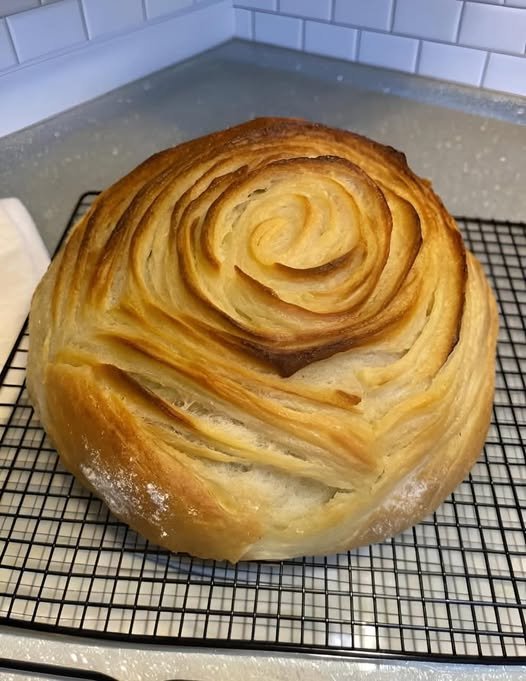
Yields: 12-14 Croissants
Active Prep Time: 2-3 hours (spread over 2 days)
Resting/Proofing Time: 16-24 hours
Baking Time: 18-22 minutes
Total Time: 18-28 hours (mostly hands-off fermentation)
Recipe Intensity: Advanced
Ingredients
For the Leaven:
-
30g active, bubbly sourdough starter (100% hydration)
-
60g bread flour
-
60g whole milk, lukewarm
For the Dough (Détrempe):
-
All of the prepared leaven
-
500g bread flour (high-protein is essential)
-
55g granulated sugar
-
10g fine sea salt
-
230g whole milk, cold
-
50g unsalted butter, softened
-
1 large egg, cold
For the Butter Block (Beurrage):
-
280g high-quality European-style butter (82-85% fat), cold
For the Egg Wash:
-
1 egg
-
1 tbsp whole milk or cream
-
A pinch of salt
Step-by-Step Instructions
Day 1: Morning (Creating the Leaven and Dough)
Step 1: Make the Leaven
8-10 hours before you plan to mix the dough, combine the 30g of active starter, 60g of flour, and 60g of lukewarm milk in a small jar or bowl. Cover and let it ferment at room temperature until it is very bubbly, has nearly doubled in size, and passes the float test (a small spoonful of leaven should float in a glass of water).
Step 2: Mix the Dough (Détrempe)
In the bowl of a stand mixer fitted with the dough hook, combine the flour, sugar, and salt. Add the prepared leaven, cold milk, softened 50g of butter, and the cold egg. Mix on low speed until a shaggy dough forms, then increase to medium speed and knead for 5-7 minutes until the dough is smooth and elastic. It should be firm, not sticky.
Step 3: Initial Bulk Fermentation
Shape the dough into a smooth ball. Place it in a lightly oiled bowl, cover tightly with plastic wrap, and let it rest at room temperature for 1 hour. Then, transfer the bowl to the refrigerator and let it cold-ferment for a minimum of 8 hours, or up to 24. This long, cold rest develops flavor and relaxes the gluten.
Day 1: Evening (Laminating the Dough)
Step 4: Prepare the Butter Block
Place the 280g of cold butter between two sheets of parchment paper. Using a rolling pin, pound and roll the butter into a neat 7×7-inch square, about ½-inch thick. Place the butter block in the refrigerator to firm up while you shape the dough.
Step 5: Encase the Butter (Lock-In)
Remove the dough from the fridge. On a lightly floured surface, roll it out into a 10×10-inch square. Place the chilled butter block in the center of the dough diagonally, so the points of the butter square face the sides of the dough square.
Fold the four corners of the dough over the butter, meeting in the center, and pinch the seams tightly to completely encase the butter. You should have a neat package.
Step 6: The First Folds (Turns)
Gently roll the dough package into a long rectangle, about 8×24 inches. Use a dry pastry brush to dust off excess flour. Perform a letter fold: fold the bottom third of the dough up to the center, then the top third down over it, like a business letter. This is your first “turn.”
Wrap the dough tightly in plastic wrap and refrigerate for 1 hour.
Step 7: The Second and Third Turns
Remove the dough from the fridge. Roll it out again to an 8×24-inch rectangle and perform a second letter fold. Wrap and chill for another hour. Repeat this process one more time for a total of three letter folds. After the final fold, wrap the dough tightly and refrigerate overnight (8-12 hours).
Day 2: Morning (Shaping, Proofing, and Baking)
Step 8: Roll and Shape the Croissants
Remove the laminated dough from the fridge. On a lightly floured surface, roll it out into a long rectangle, about 8×32 inches and ¼-inch thick. Using a pizza cutter or sharp knife, trim the edges to create neat sides.
Cut the rectangle into long, narrow triangles, each with a base of about 4-5 inches.
Make a small ½-inch notch in the center of the base of each triangle. Gently stretch the two corners at the base, then roll the dough up towards the tip, applying light pressure. Place the shaped croissants on a parchment-lined baking sheet, seam-side down, and curve them into a classic crescent shape.
Step 9: The Final Proof
This is the most critical step. Let the croissants proof in a warm, draft-free spot (ideally 75-78°F or 24-26°C) for 4-6 hours. They are ready when they are visibly puffy, jiggle slightly when you shake the tray, and the layers are beginning to separate. Do not rush this step.
Step 10: Bake to Golden Perfection
Preheat your oven to 375°F (190°C). Gently brush the proofed croissants with the egg wash, being careful not to drip it down the sides and glue the layers together.
Bake for 18-22 minutes, rotating the tray halfway through, until the croissants are a deep, golden brown and sound hollow when tapped on the bottom.
Transfer to a wire rack to cool for at least 20 minutes before devouring. Listen for the iconic crackle of the layers as they cool.
Baker’s Notes & Troubleshooting
-
Temperature is Everything: Your butter and dough must remain cold. If the butter starts to soften and ooze, stop immediately, wrap the dough, and return it to the fridge for 30 minutes.
-
The Starter: Your starter must be active and peak to provide enough lift. If your kitchen is cold, the final proof will take longer.
-
Lamination Leaks: If butter breaks through the dough during rolling, dust the spot with flour and continue. It’s not a disaster.
-
Dense Croissants: This is usually due to under-proofing. Be patient during the final proof. The croissants should look noticeably larger and feel airy.
Storage and Reheating
Sourdough croissants are best enjoyed the day they are baked. Leftovers can be stored in a paper bag at room temperature for 1 day. For longer storage, freeze baked croissants in a zip-top bag for up to 2 months.
To refresh, place frozen croissants in a 350°F (175°C) oven for 8-10 minutes until warm and crisp.
Nutrition Information
(Please note: The following nutrition information is an estimate for one croissant.)
Serving Size: 1 Croissant
-
Calories: ~310
-
Total Fat: 18g
-
Saturated Fat: 11g
-
Cholesterol: 55mg
-
Sodium: 280mg
-
Total Carbohydrates: 31g
-
Dietary Fiber: 1g
-
Sugars: 6g
-
Protein: 6g
Dietary Note: This recipe contains gluten, dairy, and eggs. It is not suitable for vegan, gluten-free, or dairy-free diets. The long fermentation process may make it easier to digest for some individuals with mild gluten sensitivities.