-
Prep Time: 15 minutes
-
Cook Time: 15 minutes
-
Total Time: 30 minutes
-
Servings: 4
-
Cooking Intensity: Easy – Fast-paced but simple steps, perfect for a weeknight.
Ingredients
For the Noodles & Beef:
-
8 oz dried lo mein noodles, udon noodles, or spaghetti
-
1 tbsp neutral oil (like avocado or vegetable oil)
-
1 lb lean ground beef (90/10 or 93/7 recommended)
-
4 cloves garlic, minced
-
1 tbsp fresh ginger, finely grated or minced
-
4 green onions, sliced (white and green parts separated)
-
1 medium carrot, julienned or cut into matchsticks
-
1 medium red bell pepper, thinly sliced
For the Legendary Mongolian Sauce:
-
½ cup low-sodium soy sauce (or tamari for gluten-free)
-
½ cup water or low-sodium beef broth
-
⅓ cup packed dark brown sugar
-
2 tbsp hoisin sauce
-
1 tbsp rice vinegar
-
2 tsp toasted sesame oil
-
1 tsp chili garlic sauce or sriracha (adjust to taste)
-
1 tbsp cornstarch mixed with 2 tbsp cold water (slurry)
For Garnish:
-
1 tsp sesame seeds
-
Additional sliced green onions
Step-by-Step Instructions
Step 1: Noodle Prep
Bring a large pot of salted water to a boil. Cook the noodles according to package directions until al dente. Drain and rinse briefly with cool water to stop the cooking. Toss with a few drops of oil to prevent sticking. Set aside.
Pro Tip: Time this so your noodles finish just as your sauce is thickening. You can use the noodle cooking water to blanch julienned carrots for 30 seconds for a brighter color and slight tenderness.
Step 2: Brown the Beef & Aromatics
While the noodles cook, heat the neutral oil in a large skillet, wok, or Dutch oven over medium-high heat. Add the ground beef, breaking it up with a wooden spoon or spatula. Cook for 5-6 minutes until browned and cooked through. Do not drain the excess fat if using lean beef—it’s minimal and adds flavor.
Add the white parts of the green onions, minced garlic, and grated ginger to the beef. Stir-fry for 1 minute until incredibly fragrant. Add the carrot and bell pepper strips and stir-fry for another 2-3 minutes until the vegetables are just beginning to soften but still retain a crisp-tender bite.
Step 3: Build & Thicken the Sauce
Push the beef and vegetable mixture to the sides of the pan, creating a well in the center. Pour in the soy sauce, water/broth, brown sugar, hoisin, rice vinegar, sesame oil, and chili garlic sauce. Stir to combine the liquids and dissolve the sugar, then mix everything in the pan together.
Bring the mixture to a simmer. Give the cornstarch slurry a quick re-stir and slowly drizzle it into the simmering sauce while stirring constantly. Cook for 1-2 minutes, until the sauce transforms from thin and watery to a glossy, luxurious glaze that coats the back of a spoon.
Step 4: The Grand Finale – Combine & Toss
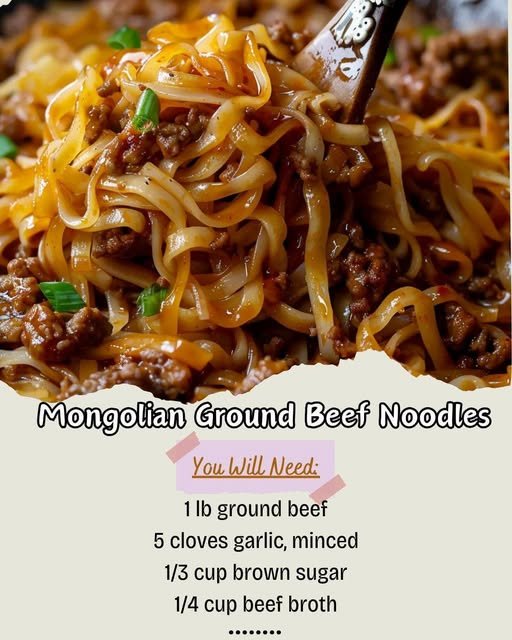
Add the cooked and drained noodles to the skillet. Using tongs or two spoons, toss vigorously for 1-2 minutes, ensuring every strand of noodle and every bit of beef is thoroughly coated in the sticky, glistening Mongolian sauce. The noodles will soak up the flavor beautifully.
Step 5: Serve Immediately
Remove from heat. Garnish generously with the reserved green onion tops and a sprinkle of sesame seeds.
Serve hot directly from the skillet for a dramatic family-style presentation.
Recipe Success Tips & Expert Variations
-
The Sugar Swap: For a less refined sweetener, use an equal amount of honey or maple syrup. The flavor will be slightly different but still delicious.
-
Vegetable Versatility: This is a perfect clean-out-the-fridge recipe. Thinly sliced mushrooms, broccoli florets, snap peas, or shredded cabbage are excellent additions. Add tougher veggies (like broccoli) with the carrots.
-
Protein Flexibility: Ground turkey, chicken, or pork work wonderfully. For a plant-based version, use crumbled extra-firm tofu or a plant-based ground “meat.” Press and brown the tofu well for the best texture.
-
Control the Heat: The 1 tsp of chili garlic sauce provides a gentle warmth. For a mild dish, reduce to ½ tsp or omit. For true fire lovers, increase to 1 tbsp or add a drizzle of chili oil at the end.
-
Sauce Consistency Secret: If your sauce thickens too much before adding the noodles, simply splash in 1-2 tablespoons of water or broth to loosen it. If it’s too thin, let it simmer a bit longer or add another half-slurry of cornstarch and water.
Storage & Reheating Instructions
This dish is best enjoyed fresh but makes for excellent leftovers.
-
Refrigeration: Store in an airtight container in the refrigerator for 3-4 days.
-
Freezing: Due to the noodles, freezing is not recommended as they can become mushy upon thawing.
-
Reheating for Best Results:
-
Stovetop (Preferred): Reheat in a skillet or wok over medium heat with a splash of water or broth. This helps revive the sauce’s consistency and prevents sticking.
-
Microwave: Reheat in a microwave-safe bowl, covered, in 60-second intervals, stirring between each, until hot. Add a teaspoon of water before heating.
-
Nutrition Information
(Per serving, based on 4 servings)
| Nutrient | Amount | % Daily Value* |
|---|---|---|
| Calories | ~520 kcal | |
| Total Fat | 16g | 21% |
| Saturated Fat | 5g | 25% |
| Cholesterol | 70mg | 23% |
| Sodium | ~1650mg** | 72% |
| Total Carbohydrate | 62g | 23% |
| Dietary Fiber | 3g | 11% |
| Sugars | 24g | |
| Protein | 32g | 64% |
Percent Daily Values are based on a 2,000 calorie diet.
_**Sodium Note: This is a savory, sauce-based dish. To significantly reduce sodium (by up to 40%), use ¼ cup regular soy sauce + ¼ cup water, or use all low-sodium soy sauce and low-sodium broth. The values are estimates and can vary based on specific brands of soy sauce, hoisin, and broth used.*