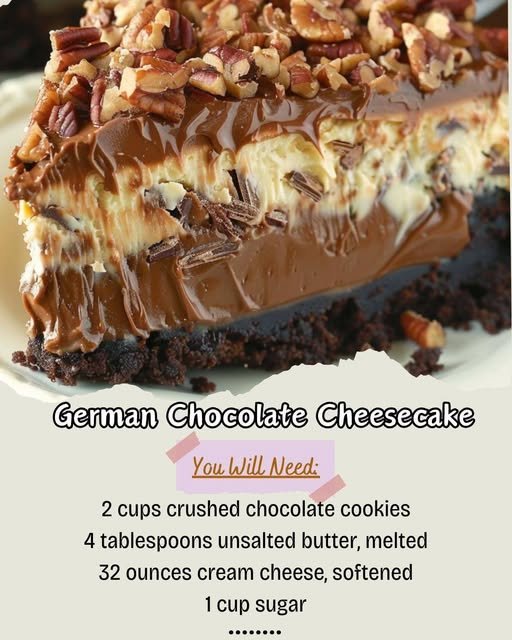
-
Prep Time: 45 minutes
-
Cook Time: 1 hour 15 minutes
-
Chill Time: 8 hours (or preferably overnight)
-
Total Time: 10 hours
-
Course: Dessert
-
Cuisine: American
-
Diet: Vegetarian
-
Difficulty: Medium-High Intensity – Requires multiple components and careful baking.
-
Servings: 12 slices
-
Yield: One 9-inch cheesecake
Equipment
-
9-inch Springform Pan
-
Food Processor or Rolling Pin & Zip-Top Bag (for crust)
-
Stand Mixer or Hand Mixer
-
Large Roasting Pan (for water bath)
-
Aluminum Foil
Ingredients
For the Chocolate Crust:
-
24 Oreo cookies (or similar chocolate sandwich cookies)
-
5 tablespoons unsalted butter, melted
-
1/8 teaspoon salt
For the Chocolate Cheesecake Filling:
-
32 oz (four 8-oz blocks) full-fat cream cheese, room temperature
-
1 ½ cups granulated sugar
-
½ cup unsweetened cocoa powder, sifted
-
4 oz semi-sweet chocolate, melted and slightly cooled
-
1 cup full-fat sour cream, room temperature
-
2 teaspoons pure vanilla extract
-
4 large eggs, room temperature
-
2 large egg yolks, room temperature
For the German Chocolate Topping:
-
1 cup evaporated milk
-
1 cup granulated sugar
-
3 large egg yolks, lightly beaten
-
½ cup (1 stick) unsalted butter
-
1 teaspoon vanilla extract
-
1 ½ cups sweetened shredded coconut
-
1 cup chopped pecans, toasted
Instructions
Part 1: The Chocolate Crust
-
Preheat and Prep: Preheat your oven to 350°F (175°C). Tightly wrap the outside of your 9-inch springform pan in a double layer of heavy-duty aluminum foil to prevent water from leaking in during the water bath.
-
Process Cookies: Place the entire Oreo cookies (filling and all) into a food processor. Pulse until you have fine, even crumbs. Alternatively, place them in a sturdy zip-top bag and crush with a rolling pin.
-
Combine: In a medium bowl, mix the chocolate cookie crumbs with the melted butter and salt until the mixture resembles wet sand and holds together when pinched.
-
Form Crust: Press the crumb mixture firmly and evenly into the bottom of the prepared springform pan. Use the flat bottom of a measuring cup to compact it.
-
Pre-Bake: Bake the crust for 10 minutes. Remove from the oven and set aside to cool slightly. Reduce the oven temperature to 325°F (160°C).
Part 2: The Chocolate Cheesecake Filling
-
Melt Chocolate: Melt the 4 oz of semi-sweet chocolate in short bursts in the microwave or over a double boiler. Set aside to cool slightly.
-
Cream the Base: In the bowl of a stand mixer fitted with a paddle attachment (or using a hand mixer), beat the room-temperature cream cheese on medium-low speed until it is completely smooth and free of lumps, about 2-3 minutes. Scrape down the bowl and beater(s) frequently.
-
Incorporate Sugar and Cocoa: With the mixer on low, gradually add the 1 ½ cups of sugar and the sifted cocoa powder. Mix until just combined. Scrape the bowl again.
-
Add Wet Ingredients: Beat in the melted chocolate, sour cream, and vanilla extract until smooth.
-
Add Eggs Gently: One at a time, add the whole eggs and then the egg yolks, mixing on low speed only until the yolk is incorporated after each addition. Do not overmix once the eggs are in, as this incorporates too much air and can cause the cheesecake to crack.
-
Prepare for Water Bath: Pour the filling over the cooled crust. Smooth the top with a spatula. Place the foil-wrapped springform pan into a large roasting pan.
-
Bake: Carefully pour hot (almost boiling) water into the roasting pan until it comes about halfway up the sides of the springform pan. This is the water bath, which ensures gentle, even heating.
-
Bake to Set: Bake at 325°F (160°C) for 1 hour and 15 minutes. The edges of the cheesecake will be set, but the center will still have a slight jiggle—like Jell-O—when you gently shake the pan. This is perfect.
-
Cool Gradually: Turn off the oven, crack the oven door open with a wooden spoon, and let the cheesecake cool inside the oven for 1 hour. This gradual cooling is the second key to preventing cracks.
-
Chill Thoroughly: Remove the cheesecake from the water bath, take off the foil, and let it cool to room temperature on a wire rack. Then, cover it loosely with plastic wrap and refrigerate for at least 8 hours, but preferably overnight. This allows the texture to fully set and develop its signature creaminess.
Part 3: The German Chocolate Topping
This topping is best made while the cheesecake is in its final chill, or up to a day ahead.
-
Combine and Cook: In a medium saucepan, whisk together the evaporated milk, 1 cup of sugar, 3 egg yolks, and the stick of butter. Cook over medium heat, stirring constantly, until the mixture thickens and becomes a deep golden brown color, about 10-12 minutes. It should be thick enough to coat the back of a spoon.
-
Finish: Remove from heat and stir in the 1 teaspoon of vanilla, then fold in the shredded coconut and toasted pecans.
-
Cool: Allow the topping to cool completely to room temperature, stirring occasionally. It will continue to thicken as it cools.
Assembly and Serving
-
Release: Once the cheesecake is fully chilled and set, run a thin knife around the inner edge of the springform pan to loosen it. Carefully release and remove the ring.
-
Top: Spread the cooled coconut-pecan topping evenly over the top of the chilled cheesecake.
-
Slice and Serve: Use a sharp, thin knife dipped in hot water and wiped dry between each slice for clean cuts. Serve immediately.
Nutrition Information
Please note: This is an estimate provided by an online nutrition calculator. Actual values may vary based on specific ingredients used.
Serving Size: 1 slice (1/12 of cheesecake)
Calories: ~845
Total Fat: 58g (74% DV)
-
Saturated Fat: 32g (160% DV)
Cholesterol: 225mg (75% DV)
Sodium: 420mg (18% DV)
Total Carbohydrates: 76g (28% DV) -
Dietary Fiber: 4g (14% DV)
-
Sugars: 65g
Protein: 12g
Vitamin D: 1mcg (6% DV)
Calcium: 150mg (12% DV)
Iron: 3mg (17% DV)
Potassium: 380mg (8% DV)
Chef’s Notes & Tips for Success
-
Room Temperature is Key: Ensuring your cream cheese, eggs, and sour cream are at room temperature is non-negotiable. It prevents a lumpy filling and allows for smoother incorporation of air, leading to a creamier texture.
-
Don’t Overmix: Once you add the eggs, mix on low speed and only until combined. Overmixing incorporates too much air, which expands in the oven and collapses upon cooling, causing cracks.
-
The Water Bath is Your Friend: Don’t skip the water bath! It creates a humid environment that cooks the cheesecake gently and evenly, preventing a rubbery texture and a cracked, domed top.
-
Patience in Chilling: The long, overnight chill is crucial for the structure and flavor of the cheesecake. Slicing into it too early will result in a runny, under-set center.
-
Storage: Store any leftovers covered in the refrigerator for up to 5 days. This cheesecake does not freeze well once the topping has been added, as the topping can become watery upon thawing.