Yields: 4 Servings
Prep Time: 15 minutes
Cook Time: 10 minutes
Total Time: 25 minutes
Recipe Intensity: Easy
Ingredients
For the Chicken & Marinade:
-
1 lb boneless, skinless chicken breast or thighs, thinly sliced
-
1 tablespoon soy sauce
-
1 teaspoon cornstarch
-
1 teaspoon sesame oil
For the Lo Mein Sauce:
-
1/3 cup soy sauce (or tamari for gluten-free)
-
3 tablespoons oyster sauce (or vegetarian oyster sauce)
-
2 tablespoons hoisin sauce
-
1 tablespoon rice vinegar
-
2 teaspoons sesame oil
-
2 teaspoons brown sugar
-
1/4 cup chicken or vegetable broth
For the Stir-Fry:
-
12 ounces lo mein noodles, spaghetti, or linguine
-
2 tablespoons vegetable oil, divided
-
3 cloves garlic, minced
-
1 tablespoon fresh ginger, grated
-
1 cup shredded carrots
-
1 red bell pepper, thinly sliced
-
1 cup shredded napa cabbage or coleslaw mix
-
2 green onions, sliced (white and green parts separated)
-
Optional: 1 cup fresh bean sprouts
Step-by-Step Instructions
Step 1: Marinate the Chicken
In a medium bowl, combine the thinly sliced chicken with 1 tablespoon of soy sauce, 1 teaspoon of cornstarch, and 1 teaspoon of sesame oil. Toss until the chicken is evenly coated and set aside to marinate for at least 10-15 minutes while you prepare the other ingredients. The cornstarch will help tenderize the chicken and give it a velvety texture.
Step 2: Prepare the Noodles and Sauce
Cook the noodles according to package directions until al dente. For dried lo mein noodles or spaghetti, this typically takes 4-8 minutes. Drain and rinse briefly with cool water to stop the cooking process and prevent sticking. Toss with a tiny bit of oil if needed.
In a separate small bowl or liquid measuring cup, whisk together all the ingredients for the Lo Mein sauce: soy sauce, oyster sauce, hoisin sauce, rice vinegar, 2 teaspoons of sesame oil, brown sugar, and chicken broth. Set this sauce mixture aside. Having everything pre-mixed is the key to a smooth, fast stir-fry!
Step 3: Stir-Fry the Chicken
Heat a large wok or heavy-bottomed skillet over high heat. Once hot, add 1 tablespoon of vegetable oil. Add the marinated chicken in a single layer and cook for 3-4 minutes, stirring occasionally, until cooked through and nicely seared. Remove the chicken from the wok and set it aside on a clean plate.
Step 4: Sauté the Aromatics and Vegetables
Add the remaining 1 tablespoon of vegetable oil to the hot wok. Add the minced garlic, grated ginger, and the white parts of the green onions. Stir-fry for 30-60 seconds until incredibly fragrant—be careful not to burn them.
Add the harder vegetables first: the shredded carrots and sliced bell pepper. Stir-fry for 2 minutes until they just begin to soften. Then, add the softer cabbage and toss everything together for another minute.
Step 5: The Grand Finale – Combine Everything
Return the cooked chicken and any accumulated juices to the wok. Add the drained noodles and the pre-mixed Lo Mein sauce. Using tongs, toss everything together vigorously for 1-2 minutes, ensuring the noodles are heated through and every component is coated in the glorious sauce. If using, add the bean sprouts and toss for one final minute just to warm them.
Step 6: Serve Immediately
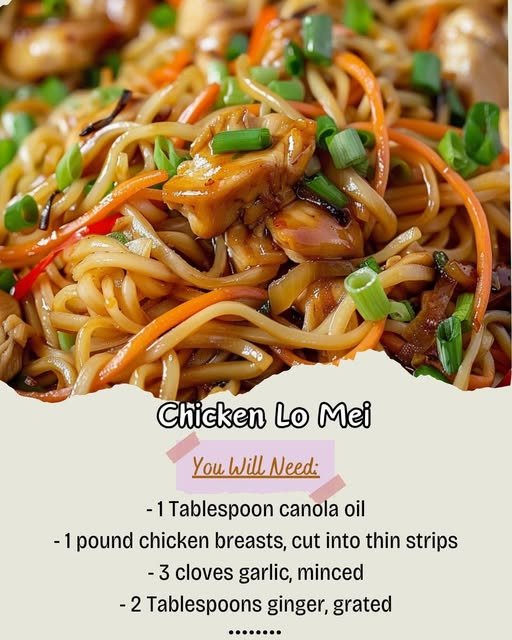
Garnish with the reserved green parts of the green onions. Serve your Chicken Lo Mein immediately in warm bowls, and enjoy the satisfaction of a takeout classic made perfectly in your own kitchen.
Chef’s Notes & Recipe Variations
-
Noodle Knowledge: True lo mein noodles are springy and yellow, but spaghetti or linguine make excellent, readily available substitutes. The key is to cook them to al dente so they don’t become mushy when tossed in the wok.
-
Vegetable Versatility: This recipe is a perfect fridge clean-out meal! Feel free to add sliced mushrooms, snap peas, broccoli florets, or water chestnuts. Add harder vegetables like broccoli earlier in the cooking process.
-
Controlling Saltiness: Different brands of soy and oyster sauce have varying salt levels. If you’re sensitive to salt, use a low-sodium soy sauce. You can always add a little more at the end, but you can’t take it out!
-
Protein Swaps: Don’t have chicken? This recipe works beautifully with thinly sliced beef, shrimp, pork, or firm tofu. Adjust the cooking time accordingly.
-
The “Wok Hei” Effect: For that signature smoky, charred flavor from Chinese restaurants (known as “wok hei”), ensure your wok is screaming hot before adding ingredients and avoid overcrowding.
Storage and Reheating
Leftovers can be stored in an airtight container in the refrigerator for up to 3 days. The noodles will soften over time but will still be delicious.
To reheat, the stovetop is best. Add a splash of water or broth to a non-stick skillet over medium heat, add the lo mein, and toss until hot. The microwave can also be used (heat in 1-minute intervals, stirring in between), but the texture will be superior from the stovetop.
Nutrition Information
(Please note: The following nutrition information is an estimate and can vary based on specific ingredients and portion sizes.)
Serving Size: 1/4 of the recipe
-
Calories: ~520
-
Total Fat: 16g
-
Saturated Fat: 2.5g
-
Cholesterol: 75mg
-
Sodium: ~1900mg
-
Total Carbohydrates: 60g
-
Dietary Fiber: 4g
-
Sugars: 9g
-
Protein: 32g
Dietary Note: This recipe is high in sodium, which is characteristic of this dish. To make it gluten-free, use tamari instead of soy sauce and ensure your oyster sauce is a certified gluten-free brand. For a vegetarian version, substitute the chicken with tofu and use vegetarian oyster sauce.