Prep Time: 15 minutes | Cook Time: 25 minutes | Total Time: 40 minutes
Skill Level: Intermediate | Serves: 4-6 | Intensity: Active Cooking Required
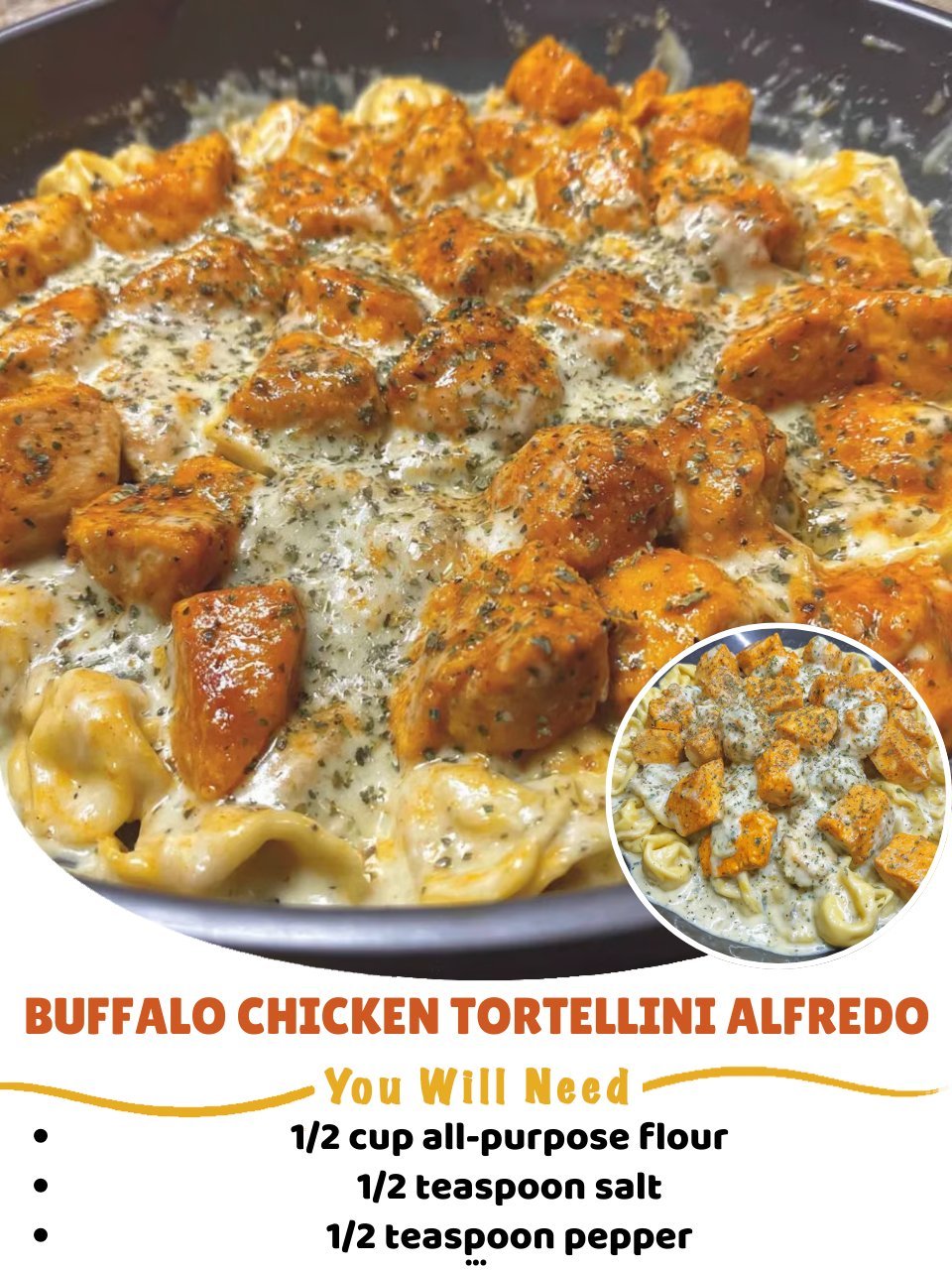
For those who live in the beautiful intersection of creamy indulgence and spicy, tangy excitement, this Buffalo Chicken Tortellini Alfredo is your culinary destination. It’s a bold, decadent fusion dish that transforms weeknight pasta into a thrilling experience. Imagine tender cheese-filled tortellini and juicy chicken, all swathed in a luxuriously creamy sauce that masterfully blends rich Alfredo with the iconic vinegar punch of Buffalo wing sauce. This recipe requires a bit of active attention but rewards you with a restaurant-worthy dish that’s guaranteed to become a new favorite.
Ingredients
For the Chicken & Pasta:
-
1 tablespoon olive oil
-
1.5 lbs boneless, skinless chicken breasts or thighs, cut into 1-inch chunks
-
1 teaspoon garlic powder
-
½ teaspoon smoked paprika
-
Salt and black pepper to taste
-
1 (18-20 ounce) package fresh cheese tortellini (refrigerated)
-
½ cup Frank’s RedHot Original Cayenne Pepper Sauce (or your preferred Buffalo sauce)
For the Alfredo Sauce:
-
4 tablespoons unsalted butter
-
4 cloves garlic, minced
-
1 ½ cups heavy cream
-
1 cup finely grated Parmesan cheese, plus more for serving
-
½ cup crumbled blue cheese or gorgonzola (optional, for authenticity)
-
½ teaspoon onion powder
-
Secret Ingredient: 2-3 tablespoons of the starchy pasta cooking water
For Garnish & Serving:
-
2-3 green onions, thinly sliced
-
¼ cup chopped fresh parsley or cilantro
-
Extra Buffalo sauce for drizzling
-
Celery sticks, for serving (a must for the full “wing night” experience)
Equipment
-
Large pot for boiling pasta
-
Large, deep skillet or Dutch oven
-
Tongs
-
Whisk
-
Measuring cups and spoons
-
Microplane or fine grater for Parmesan
Instructions
1. Season and Sear the Chicken (10 mins)
Pat the chicken chunks dry with paper towels—this is crucial for a good sear. Season generously with garlic powder, smoked paprika, salt, and black pepper. Heat olive oil in your large skillet over medium-high heat. Once hot, add the chicken in a single layer, working in batches if necessary to avoid crowding. Cook for 5-7 minutes, turning occasionally, until golden brown on all sides and cooked through. Remove the chicken to a plate and set aside. Reduce heat to medium.
2. Cook the Tortellini (8-10 mins)
While the chicken cooks, bring a large pot of generously salted water to a boil. Add the fresh tortellini and cook according to package directions, usually 3-4 minutes for fresh. Reserve 1 cup of the starchy pasta water before draining. Drain the tortellini and set aside. This water is liquid gold for your sauce.
3. Build the Signature Sauce (7 mins)
In the same skillet used for the chicken (with those flavorful browned bits still in it), melt the butter over medium heat. Add the minced garlic and cook for 1 minute until fragrant but not browned. Pour in the heavy cream and whisk to combine, scraping up any bits from the pan bottom. Let it simmer gently for 2-3 minutes to slightly thicken.
Whisk in the ½ cup of Buffalo sauce. This is where the magic happens—the cream will take on a beautiful orange hue. Reduce heat to low. Gradually whisk in the grated Parmesan and blue cheese (if using) until completely melted and smooth. The sauce should be velvety. Whisk in the onion powder. If the sauce is too thick, add the reserved pasta water, one tablespoon at a time, until your desired consistency is reached.
4. The Grand Union (5 mins)
Add the cooked tortellini and seared chicken back to the skillet with the sauce. Pour any accumulated juices from the chicken plate in as well. Gently toss everything together for 2-3 minutes over low heat, allowing the pasta to soak up the sauce and the chicken to reheat. Taste and adjust seasoning—you may want to add a pinch more salt or a extra drizzle of Buffalo sauce for more heat.
5. Serve with Style (2 mins)
Transfer the creamy, spicy pasta to a large serving bowl or plate directly from the skillet. Garnish generously with sliced green onions and fresh parsley. Offer extra grated Parmesan, a bottle of Buffalo sauce, and most importantly, a side of crisp, cool celery sticks on each plate. The contrast is divine.
The Last Bite: The Science of Balance
This recipe is a masterclass in balancing opposing culinary forces. The success lies in the layering of fats and acids. The heavy cream and Parmesan create a rich, fatty base that coats the palate. The Buffalo sauce, primarily a mixture of cayenne pepper sauce and vinegar, delivers a sharp, acidic, and spicy counterpoint. When combined correctly, they don’t compete; they complement. The fat in the Alfredo tames the heat of the Buffalo sauce, mellowing it from a sharp sting to a warm, flavorful glow, while the vinegar cuts through the richness of the cream, preventing the dish from feeling heavy. The sear on the chicken (the Maillard reaction) adds a crucial layer of deep, savory umami that grounds the entire dish. Using the starchy pasta water is the final chef’s trick—the starch molecules act as an emulsifier, binding the water-based Buffalo sauce and the fat-based cream into a single, smooth, clingy sauce that won’t separate. It’s not just pasta; it’s a carefully engineered flavor experience that delivers comfort and excitement in every forkful.
Nutrition Information (Per Serving, based on 6 servings)
-
Calories: ~780 kcal
-
Total Fat: 48g
-
Saturated Fat: 26g
-
Trans Fat: 1g
-
Cholesterol: 200mg
-
Sodium: 1320mg
-
Total Carbohydrates: 48g
-
Dietary Fiber: 3g
-
Sugars: 4g
-
Protein: 42g
Note: Nutritional information is an estimate calculated using the full ingredient list, including optional blue cheese. Sodium levels are highly dependent on the brands of Buffalo sauce, Parmesan, and broth used. For a lighter version, you can substitute half-and-half for heavy cream, though the sauce will be less luxuriously thick. The celery sticks are not just a garnish; they provide a refreshing, hydrating, and fibrous contrast to the rich dish.