Prep Time: 45 minutes (active) | Total Time: 24-36 hours (including fermentation) | Bake Time: 35-40 minutes
Skill Level: Intermediate | Makes: 1 Loaf | Calories per Slice (1/12th): ~185
Recipe Introduction: The Best of Both Worlds
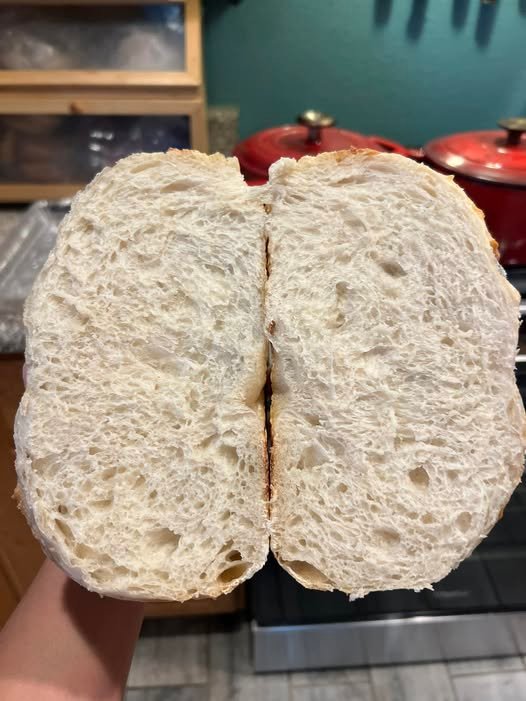
What happens when the ancient craft of sourdough meets the tender, rich comfort of a classic milk bread? You get this: an enriched sourdough milk bread. Substituting milk for water and adding a touch of butter transforms a rustic loaf into something supremely soft, with a delicate, golden-brown crust, a pillowy-soft crumb, and a subtle, comforting sweetness. The wild yeast of the sourdough starter adds a whisper of complexity, making this loaf sophisticated yet irresistibly tender. It’s perfect for sandwiches, toast, or simply eating by the slice.
Ingredients & Equipment
For the Tangzhong (Flour Paste “Starter”):
-
35g (3 tablespoons) bread flour
-
175g (¾ cup) whole milk
For the Leaven (Sourdough Boost):
-
1 tablespoon (20g) active, bubbly sourdough starter
-
50g (3 tablespoons + 1 tsp) warm whole milk (85°F / 30°C)
-
50g (⅓ cup) bread flour
For the Final Dough:
-
All of the prepared Tangzhong (cooled)
-
All of the prepared Leaven
-
250g (2 cups + 1 tbsp) bread flour
-
30g (2 tablespoons) granulated sugar
-
7g (1 ¼ teaspoons) fine sea salt
-
1 large egg, at room temperature
-
60g (4 tablespoons) unsalted butter, softened to room temperature and cut into small pieces
For Finishing:
-
1 tablespoon whole milk or heavy cream, for brushing
-
Melted butter, for brushing (optional)
Special Equipment:
-
Digital kitchen scale (highly recommended)
-
Stand mixer with dough hook (optional but helpful)
-
9×5 inch loaf pan
-
Instant-read thermometer
Day 1: Prepare Tangzhong & Leaven
Morning (9:00 AM)
-
Make the Tangzhong: In a small saucepan, whisk the 35g bread flour and 175g milk until smooth. Cook over medium-low heat, whisking constantly, until the mixture thickens to a paste-like consistency and lines form in the wake of your whisk (about 65°C / 149°F). This gelatinizes the starches, locking in moisture. Transfer to a small bowl, press plastic wrap directly on the surface, and cool to room temperature.
-
Build the Leaven: In a separate small jar, mix the 1 tbsp active starter, 50g warm milk, and 50g bread flour. Cover loosely and let ferment at room temperature for 4-6 hours, until bubbly, nearly doubled, and passes the float test.
Afternoon (2:00 PM – 3:00 PM) Mix the Dough
-
In the bowl of a stand mixer (or a large bowl if mixing by hand), combine the cooled Tangzhong, ripe Leaven, 250g bread flour, sugar, salt, and egg. Mix with the dough hook on low speed (or a dough whisk by hand) until a shaggy dough forms, about 2-3 minutes.
-
Increase speed to medium and knead for 5-7 minutes until the dough is smooth, elastic, and begins to clear the sides of the bowl. It will be sticky but should start to become cohesive.
-
Incorporate the Butter: With the mixer on low, add the softened butter pieces one at a time, waiting for each to be fully absorbed before adding the next. This will take 5-8 minutes. The dough will initially become slippery and may fall apart—persist. It will eventually come back together into a very smooth, supple, and slightly tacky dough. It should pass the “windowpane test”: a small piece can be stretched thin enough to see light through without tearing.
-
Bulk Fermentation (First Rise): Place the dough in a lightly greased bowl, cover tightly, and let rise at room temperature (70-75°F / 21-24°C) for 3-4 hours. Perform 1-2 sets of “stretch and folds” during the first 90 minutes to strengthen the gluten. The dough is ready when it looks puffy and has increased by about 50%.
Evening (6:00 PM – 7:00 PM) Shape & Cold Proof
-
Shape: Gently turn the dough onto a lightly floured surface. Pat into a rectangle, then roll it up tightly into a log, sealing the seam. Pinch the ends and place it seam-side down into a greased 9×5 inch loaf pan.
-
Final Proof: Cover the pan loosely with plastic or a damp cloth. Let it proof at room temperature for 1 hour, then place the entire pan (covered) in the refrigerator for 12-16 hours (overnight). This slow, cold proof deepens flavor and makes the dough easier to score and bake.
Day 2: Bake
Morning (8:00 AM)
-
Preheat: Remove the loaf pan from the fridge. Let it sit at room temperature while you preheat your oven to 375°F (190°C) for at least 30 minutes.
-
Score & Glaze: Using a sharp razor or lame, make a single, shallow slash lengthwise down the center of the loaf. Brush the top gently with the 1 tbsp of milk or cream. This promotes browning and gives a soft shine.
-
Bake: Place the loaf pan in the center of the oven. Bake for 35-40 minutes, or until the top is a deep, golden brown and the internal temperature registers 190°F (88°C) on an instant-read thermometer.
-
Cool: Immediately remove the bread from the pan and place it on a wire rack. For an extra-soft crust, brush the top with a little melted butter. Let it cool completely (at least 3-4 hours) before slicing. The crumb will be gummy if cut warm.
Serving & Pairing Suggestions
-
Ultimate Toast: Makes exceptional, rich-tasting toast for jam or cinnamon sugar.
-
Sandwich Supreme: The tender crumb holds up perfectly to fillings without tearing, ideal for everything from egg salad to Thanksgiving leftovers.
-
French Toast Base: This bread makes the most decadent, custardy French toast imaginable.
-
Simple Pleasure: Enjoy a slice with just a smear of good butter and a sprinkle of flaky salt.
Nutrition Information (Per Slice, 1/12th of Loaf)
-
Calories: ~185
-
Total Fat: 7g
-
Saturated Fat: 4g
-
Cholesterol: 30mg
-
Sodium: 245mg
-
Total Carbohydrates: 26g
-
Dietary Fiber: 1g
-
Sugars: 4g
-
Protein: 5g
Nutritional information is an estimate. The milk, butter, and egg increase fat and protein content compared to a lean sourdough, while the Tangzhong method improves moisture retention, keeping the bread soft longer.
The Baker’s Guide: The Science of Milk & Enrichment
Why Add Milk to Sourdough?
Swapping water for milk is an “enrichment” that profoundly changes the final loaf:
-
Tenderness & Soft Crumb: The milk fats and proteins (casein, whey) coat the flour’s gluten strands, inhibiting their formation just enough to create a softer, more tender, and finer crumb structure. The lactose (milk sugar) also contributes to a softer crust through Maillard browning.
-
Rich Flavor & Color: Lactose is a reducing sugar that caramelizes during baking, promoting a deeper golden-brown crust and a subtly sweeter, more complex flavor than water-based bread.
-
Extended Freshness: The fat acts as a natural preservative by binding water molecules, slowing down starch retrogradation (staling). This bread stays soft for days.
-
Nutritional Boost: Adds calcium, protein, and vitamins.
Key Techniques Explained:
-
The Tangzhong (Flour Paste): This Japanese-inspired technique, popularized in Asian milk breads, is the secret to exceptional softness and shelf-life. By pre-gelatinizing a portion of the flour, the starch can absorb and hold significantly more water and milk. This creates a stable, moist gel that bakes into an incredibly soft, springy, and moist crumb that resists drying out.
-
The Cold Proof (Retardation): Even with enrichments, a long, cold fermentation is beneficial. It allows the sourdough culture to slowly acidify the dough, developing a more nuanced flavor that balances the richness. It also makes the soft, enriched dough much easier to handle and score.
-
The Windowpane Test: Crucial for enriched doughs. Proper gluten development must be achieved before the butter is added, as fat inhibits further gluten formation. The windowpane ensures you have a strong enough network to support the butter and rise properly.
Troubleshooting Enriched Sourdough:
-
Dense, Heavy Loaf:
-
Cause: Under-kneaded (insufficient gluten before adding butter) or under-proofed.
-
Fix: Ensure a clean windowpane before adding butter. Let the dough proof until truly puffy. Enriched doughs often take slightly longer to rise.
-
-
Butter Leaking Out During Baking:
-
Cause: Butter was too cold or added too quickly, not fully incorporated into the dough matrix.
-
Fix: Ensure butter is truly softened (cool to the touch but easily indented). Add pieces slowly on low speed, waiting for full absorption.
-
-
Lacks Sourdough Tang:
-
Cause: Shorter, warmer fermentation favors yeast over bacteria; milk’s pH can also slightly mute acidity.
-
Fix: Lean into the long, cold proof. For more tang, let the shaped dough proof at cool room temperature (68°F/20°C) for 2-3 hours before the cold retard.
-
-
Crust is Too Hard or Thick:
-
Cause: Baked at too high a temperature or not glazed.
-
Fix: The milk wash promotes a softer, more delicate crust. Stick to 375°F (190°C) for this enriched loaf.
-
Storage & Use:
-
Storing: Keep in a plastic bag or airtight container at room temperature for up to 5 days due to its enriched nature.
-
Freezing: Slice and freeze for up to 3 months. Toast directly from frozen.
-
Leftover Bread: Makes outstanding bread pudding, croutons, or strata.