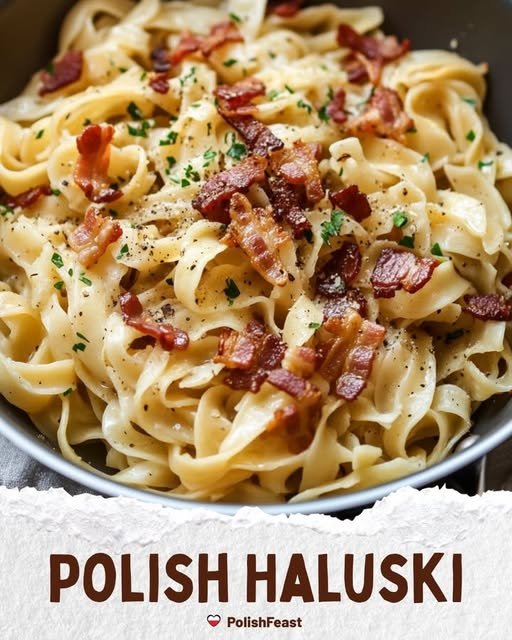
Yields: 4-6 servings as a main course
Prep Time: 15 minutes
Cook Time: 25 minutes
Total Time: 40 minutes
Recipe Intensity: Easy – This is a straightforward, one-pan-and-one-pot recipe perfect for cooks of all skill levels. It involves fundamental techniques like boiling pasta and sautéing vegetables.
Ingredients
For the Bacon & Cabbage:
-
8 ounces (about 225g) thick-cut bacon, chopped into ½-inch pieces
-
1 large yellow onion, thinly sliced
-
1 large head green cabbage (about 2-2.5 lbs), cored and thinly sliced
-
3 cloves garlic, minced
-
½ teaspoon caraway seeds (optional, but highly recommended for an authentic flavor)
-
Salt and freshly ground black pepper to taste
For the Noodles & Sauce:
-
12 ounces (about 340g) wide egg noodles
-
6 tablespoons unsalted butter, cut into pieces
-
¼ cup chopped fresh parsley, for garnish
-
(Optional) Grated Parmesan cheese, for serving
Instructions
Step 1: The Foundation – Rendering the Bacon
Place the chopped bacon in a large, cold skillet or Dutch oven. Turn the heat to medium and cook, stirring occasionally, until the bacon is brown and crispy. This process should take about 8-10 minutes. The key is to start in a cold pan to slowly render the fat, resulting in evenly cooked, perfectly crisp bacon bits.
Once crispy, use a slotted spoon to remove the bacon bits and transfer them to a plate lined with a paper towel. Leave the rendered bacon fat in the skillet—this liquid gold is the flavor base for our entire dish.
Step 2: Building Flavor – Sautéing the Aromatics
There should be about 3-4 tablespoons of bacon fat in your skillet. If there’s significantly more, you can spoon a little out. If there’s less, you can supplement with a bit of butter or olive oil. Add the thinly sliced onion to the hot bacon fat and cook over medium heat for 5-7 minutes, until the onions have softened and become translucent.
Add the minced garlic and the optional caraway seeds to the skillet. Caraway seeds have a warm, slightly anise-like flavor that pairs exquisitely with cabbage, cutting through its natural bitterness and adding a wonderful depth. Cook for just 30 seconds until the garlic is fragrant.
Step 3: The Star Ingredient – Transforming the Cabbage
Now, add the massive pile of thinly sliced cabbage to the skillet. It will seem like far too much, but have faith—cabbage wilts dramatically. Season with a good pinch of salt and a few grinds of black pepper.
Increase the heat to medium-high and cook, stirring frequently, for 12-15 minutes. The goal is to cook the cabbage down until it is tender, sweet, and has developed some beautiful browned, caramelized edges. Do not rush this step; this caramelization is where the magic happens, transforming the humble cabbage into something truly special.
Step 4: The Perfect Partner – Cooking the Noodles
While the cabbage is frying, bring a large pot of generously salted water to a boil. Add the wide egg noodles and cook according to the package directions until al dente. The sturdy, chewy texture of egg noodles is ideal for standing up to the robust cabbage and butter sauce.
Just before the noodles are finished cooking, scoop out about ½ cup of the starchy pasta water and set it aside. This water is a secret weapon for creating a silky, emulsified sauce. Drain the noodles and return them to the hot pot (off the heat).
Step 5: The Grand Unification – Bringing It All Together
To the pot with the hot, drained noodles, add the 6 tablespoons of butter. Toss continuously until the butter has melted and coated every noodle in a rich, glossy film.
Now, add the entire contents of the skillet—the fried cabbage and onions—into the pot with the buttery noodles. Also, add about half of the reserved crispy bacon bits.
Gently toss everything together. If the mixture seems a bit dry, add a splash of the reserved pasta water, one tablespoon at a time, until the dish comes together in a cohesive, saucy way. The starch in the water will help the butter and bacon fat cling perfectly to the noodles and cabbage.
Step 6: The Final Presentation – Serve with Gusto
Taste the dish and adjust the seasoning with more salt and pepper if needed. Transfer the buttery noodle and cabbage mixture to a large serving platter or individual bowls.
Garnish generously with the remaining crispy bacon bits and the chopped fresh parsley. The parsley adds a necessary pop of color and a fresh, grassy note that balances the richness of the dish. For those who love a salty, umami kick, pass grated Parmesan cheese at the table.
Nutrition Information
Please note: The following is an estimate based on the ingredients used and can vary significantly based on specific brands and portion sizes. It is provided for informational purposes only.
Serving Size: ⅙ of the recipe
Calories: ~485
Total Fat: 24g
-
Saturated Fat: 12g
-
Trans Fat: 0g
Cholesterol: 95mg
Sodium: 480mg
Total Carbohydrates: 52g -
Dietary Fiber: 6g
-
Sugars: 8g
Protein: 16g
Dietary Considerations: This is a hearty, comforting dish and is accordingly rich. For a lighter version, you can use center-cut bacon to reduce fat, or substitute half the butter with a tablespoon of olive oil. The dish is naturally vegetarian-adaptable by omitting the bacon and starting with 3 tablespoons of olive oil, adding a teaspoon of smoked paprika to mimic the smoky flavor.
Storing, Reheating, and Pro-Tips
-
Storing Leftovers: Allow the dish to cool completely before storing it in an airtight container in the refrigerator for up to 3 days.
-
Reheating for Best Results: Reheat gently in a skillet over medium-low heat with a splash of water or broth to prevent the noodles from drying out. The microwave will work but can make the noodles a bit rubbery.
-
Bacon Fat is Flavor: Do not skip cooking the cabbage in the bacon fat. This is the single most important step for building a deep, savory foundation.
-
Don’t Crowd the Cabbage: If your skillet is too small, cook the cabbage in two batches to ensure it fries and caramelizes instead of steaming.
-
Al Dente is Key: Be sure not to overcook the egg noodles, as they will continue to soften slightly when mixed with the hot cabbage and butter.
This recipe is a testament to the beauty of rustic, home-cooked food. It’s a dish that requires little effort but returns immense satisfaction, a bowl of pure, uncomplicated comfort that is sure to become a regular in your culinary rotation.