Prep Time: 30 minutes (plus 12-16 hours for bulk fermentation)
Cook Time: 45-50 minutes
Proofing Time: 4-6 hours (or overnight in the fridge)
Total Time: ~18-24 hours (mostly hands-off)
Yields: 1 Loaf
Skill Level: Intermediate
Author: [Your Website/Blog Name]
A Symphony of Sweet and Tangy Flavors
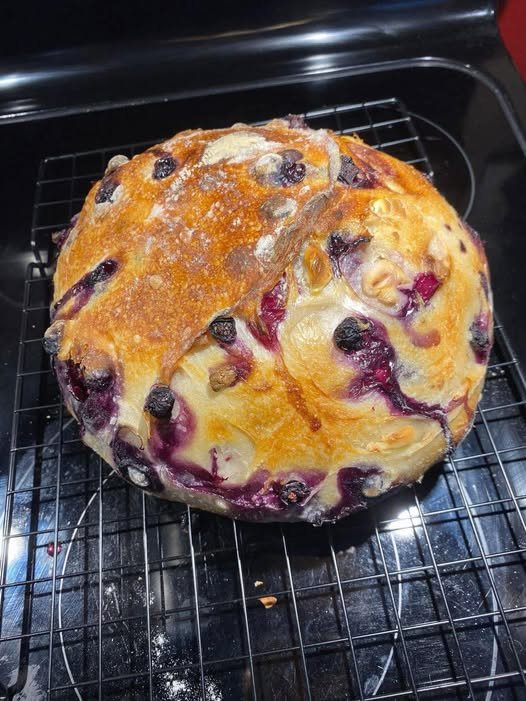
There’s sourdough, and then there’s this sourdough. This Blueberry Lemon Cream Cheese Sourdough Bread is not your everyday loaf. It’s a beautiful, flavorful journey that transforms simple ingredients into a breathtaking centerpiece. Imagine a crisp, blistered crust giving way to a soft, tangy, and open crumb, punctuated by bursts of juicy blueberries and swirls of rich, lemony cream cheese.
This recipe is for the baker who has mastered a basic sourdough and is ready to level up. The process requires patience and a feel for the dough, but the reward is immeasurable. The key is creating a strong, active starter and handling the dough gently to protect the delicate blueberries and maintain those beautiful, distinct swirls of filling. Get ready to bake a loaf that will fill your kitchen with an incredible aroma and earn you a standing ovation from anyone lucky enough to taste it.
Ingredients
For the Sourdough Base:
-
100 g (½ cup) active sourdough starter, at its peak
-
350 g (1 ½ cups) warm water
-
450 g (3 ¾ cups) bread flour
-
50 g (⅓ cup) whole wheat flour
-
10 g (2 tsp) fine sea salt
For the Filling:
-
150 g (1 cup) fresh blueberries (frozen can be used, but do not thaw)
-
125 g (4.5 oz) full-fat block cream cheese, cold
-
Zest of 1 large lemon
-
25 g (2 tbsp) granulated sugar
For Topping (Optional):
-
A dusting of rice flour for scoring
Equipment You’ll Need
-
Digital Kitchen Scale (highly recommended for accuracy)
-
Large Mixing Bowl
-
Bench Scraper
-
Banneton Proofing Basket
-
Dutch Oven with Lid
-
Parchment Paper
Instructions
Day 1: Evening Prep & Autolyse
-
Combine Flours and Water (Autolyse): Around 7:00 PM, in a large bowl, whisk together the 450g bread flour and 50g whole wheat flour. Pour in the 350g of warm water and mix with your hands or a spatula until no dry bits remain. The dough will be shaggy. Cover the bowl and let it rest for 1 hour. This process, called autolyse, allows the flour to fully hydrate and strengthens the gluten network, making the dough easier to handle.
-
Incorporate Starter and Salt: After the hour, add the 100g of active sourdough starter to the top of the dough. Use wet hands to dimple and pinch the starter into the dough until it is fully incorporated. It will be messy, but be patient. Let it rest for another 30 minutes, covered.
-
Add the Salt: Sprinkle the 10g of salt over the dough. Add a tiny splash of water (about a teaspoon) to help it dissolve. Once again, use wet hands to pinch and fold the salt into the dough until it feels smooth and integrated.
The Bulk Fermentation & Folding
-
Bulk Fermentation Begins: This is the main rising period. Your bulk fermentation will now begin and will last for about 4-5 hours at a room temperature of 74-76°F (23-24°C). Mark the starting level of the dough on the side of your bowl with a marker or a piece of tape.
-
Perform Stretch and Folds: Over the next few hours, you will perform a series of “stretch and folds” to build strength in the dough.
-
30 minutes after adding salt: With a wet hand, reach under one side of the dough, stretch it up, and fold it over the center. Rotate the bowl a quarter turn and repeat 3-4 more times until you’ve gone all the way around. This is one set.
-
Repeat this set of stretch and folds 3 more times, at 30-minute intervals. You will have done 4 sets total over 2 hours.
-
-
Add the Filling (Crucial Step!): After the final set of folds, it’s time to add the filling. Do not mix it in. Instead, turn the dough out onto a lightly floured surface. Gently press and stretch it into a rough rectangle, about ½-inch thick.
-
In a small bowl, mix the cold cream cheese (cut into small chunks), lemon zest, and sugar.
-
Dot the cream cheese mixture and the blueberries evenly over the surface of the dough.
-
Now, carefully roll the dough up like a jelly roll, tucking in the sides as you go. Place the dough back into the bowl, seam-side down.
-
-
Complete Bulk Fermentation: Let the dough rest, covered, for the remainder of the bulk fermentation (another 2-3 hours). It is ready when it looks puffy, has increased in volume by about 30-50%, and has a few bubbles on the surface.
Shaping and Cold Proof
-
Pre-Shape and Bench Rest: Very gently, turn the dough out onto an unfloured surface. Using a bench scraper, shape it into a loose round. Be careful not to crush the blueberries. Let it rest for 20-30 minutes, uncovered. This is the bench rest.
-
Final Shape: Lightly flour your work surface and the top of your dough. Gently flip it over so the floured side is down. Shape it into a tight boule (round) or batard (oval), creating surface tension. Be firm but gentle to avoid bursting the berries.
-
Into the Banneton: Generously dust your banneton with rice flour (this prevents sticking). Place your shaped dough into the banneton, seam-side UP. Cover it with a plastic bag or a damp tea towel.
-
Cold Proof: Place the entire banneton in the refrigerator for a minimum of 4 hours, or preferably overnight (12-16 hours). This slow, cold fermentation develops incredible flavor and makes the dough easier to score.
Day 2: Baking Day!
-
Preheat the Oven: At least 30 minutes before you’re ready to bake, place your Dutch oven, with the lid on, into your oven and preheat to 475°F (245°C).
-
Score the Dough: Take your banneton out of the fridge. Place a piece of parchment paper over the top and carefully flip it over. The dough should release easily. You should see a beautifully risen loaf. Using a sharp lame or razor blade, score the top. A simple, deep slash down the center works well.
-
Bake: Carefully remove the scorching hot Dutch oven from your oven. Take off the lid. Using the parchment paper as a sling, lower your dough into the Dutch oven. Put the lid back on.
-
Bake Covered: Bake with the lid on for 25 minutes. This creates a steamy environment, giving you that classic, crispy sourdough crust and a great oven spring.
-
Bake Uncovered: Reduce the oven temperature to 450°F (230°C). Remove the lid. Continue baking for another 20-25 minutes, or until the crust is a deep, golden brown and the internal temperature reads at least 208°F (98°C).
-
Cool Completely: This is non-negotiable! The structure is still setting and the filling is molten hot. Transfer the loaf to a wire rack and let it cool for a minimum of 4 hours, preferably overnight, before slicing. Slicing too early will result in a gummy texture.
Nutrition Information (Approximate, per slice – 12 slices per loaf)
-
Calories: 245 kcal
-
Carbohydrates: 42g
-
Protein: 7g
-
Fat: 5g
-
Saturated Fat: 3g
-
Cholesterol: 15mg
-
Sodium: 335mg
-
Fiber: 2g
-
Sugar: 6g
Nutrition information is an estimate and will vary based on ingredient brands and precise measurements.