Prep Time: 30 minutes | Cook Time: 2.5 to 3 hours (mostly hands-off)
Total Time: 3 to 3.5 hours
Difficulty: Intermediate (requires patience, not skill)
Effort Level: Moderate (active browning, then slow simmering)
Servings: 6 generous bowls
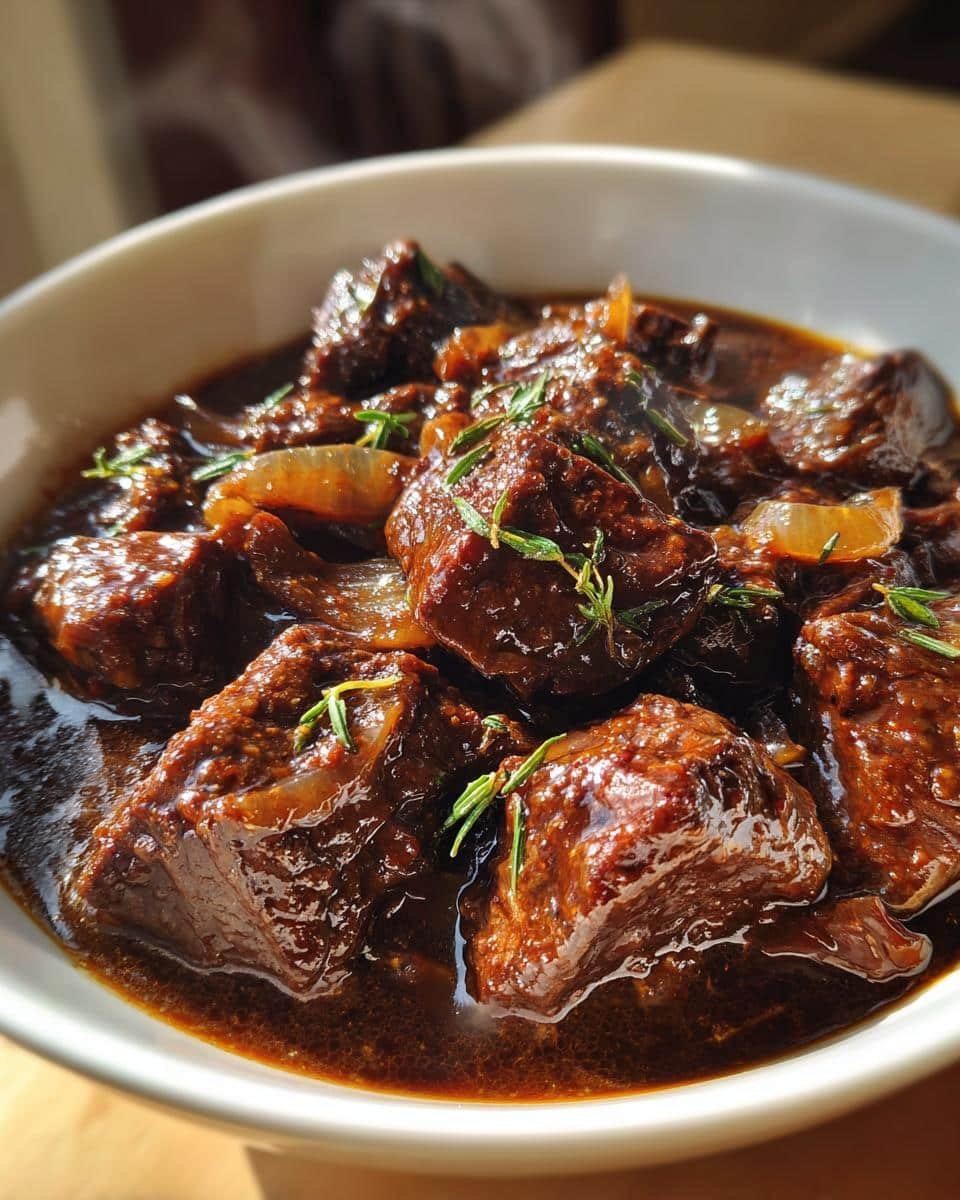
Enter the realm of ultimate cold-weather comfort with this Hearty Beef Carbonnade Stew, a classic Belgian masterpiece that redefines richness. This isn’t just any beef stew; it’s a soul-warming, deeply flavorful fusion where tender, slow-braised beef mingles with sweet caramelized onions in a velvety, complex gravy built on a foundation of dark beer and a surprising hint of brown sugar and vinegar. The beer doesn’t just add liquid—it transforms, mellowing into a malty, slightly sweet essence that pairs perfectly with the savory beef. Traditionally thickened with slices of bread, our version achieves its luxurious body through a slow reduction and a touch of flour, making it gluten-friendly while staying true to its roots. This is a weekend project that fills your home with an unforgettable aroma and rewards your patience with layers of flavor that improve with every passing hour.
Ingredients
For the Stew:
-
3 lbs (1.4 kg) beef chuck roast, trimmed of excess fat and cut into 1.5-inch cubes
-
Kosher salt and freshly ground black pepper
-
3 tablespoons all-purpose flour (or a 1:1 gluten-free blend)
-
3 tablespoons unsalted butter or bacon fat, divided
-
3 tablespoons olive oil or avocado oil, divided
-
2 lbs (900g) yellow onions (about 4 large), thinly sliced
-
4 garlic cloves, minced
-
1 (12 oz) bottle dark Belgian ale or brown ale (e.g., Chimay, Leffe Brune, or a domestic like Newcastle)
-
2 cups low-sodium beef broth
-
2 bay leaves
-
1 tablespoon fresh thyme leaves (or 1 teaspoon dried)
-
2 tablespoons dark brown sugar
-
1 tablespoon Dijon mustard
-
2 tablespoons apple cider vinegar or red wine vinegar
-
Optional: 3 strips of thick-cut bacon, diced (rendered fat used for browning)
For the Final Garnish & Serving:
-
Chopped fresh parsley
-
Crusty bread, buttered egg noodles, or mashed potatoes for serving
Equipment
-
Large, heavy-bottomed Dutch oven (5-7 quarts is ideal)
-
Tongs
-
Wooden spoon
-
Sharp knife and cutting board
-
Measuring cups and spoons
-
Small bowl for mixing
Step-by-Step Instructions
Step 1: Season, Dredge, and Sear the Beef (The Foundation of Flavor)
Pat the beef cubes completely dry with paper towels. This is the single most important step for achieving a proper sear, not steam. Season generously on all sides with salt and pepper.
Toss the beef cubes with the flour until lightly coated. Shake off any excess.
In your Dutch oven, heat 2 tablespoons of oil and 1 tablespoon of butter over medium-high heat until shimmering. Working in batches to avoid crowding, sear the beef on all sides until a deep, dark brown crust forms, about 3-4 minutes per batch. Crowding the pan will cause the meat to steam. Transfer each browned batch to a large plate or bowl. This process builds the “fond”—the flavorful browned bits at the bottom of the pot.
Step 2: Slowly Caramelize the Onions (The Heart of the Dish)
Reduce the heat to medium-low. Add the remaining 2 tablespoons of butter and 1 tablespoon of oil to the pot. Add all the thinly sliced onions and a pinch of salt. Cook, stirring occasionally, for 35-45 minutes. You are not just softening them; you are encouraging a deep, sweet, golden-brown caramelization. Be patient—this step cannot be rushed. In the last 5 minutes, add the minced garlic and cook until fragrant.
Step 3: Deglaze and Build the Braising Liquid
Increase the heat to medium-high. Pour in the dark ale, scraping the bottom vigorously with your wooden spoon to release all the glorious browned bits (fond). Let it simmer for 2-3 minutes to cook off the raw alcohol edge.
Stir in the beef broth, brown sugar, Dijon mustard, vinegar, bay leaves, and thyme. Bring to a gentle simmer.
Step 4: The Long, Slow Braise
Return the browned beef and any accumulated juices to the pot. The liquid should just barely cover the meat. If needed, add a splash more broth or water.
Bring to a very low simmer, then cover the pot and reduce the heat to the lowest possible setting. Let it cook gently for 2 to 2.5 hours. Alternatively, you can place the covered pot in a preheated 300°F (150°C) oven for the same time. The stew is ready when the beef is fork-tender and easily shreds.
Step 5: Final Adjustments and Serving
Once the beef is tender, skim any excess fat from the surface with a spoon. If the sauce seems too thin, remove the lid, increase the heat slightly, and simmer uncovered for 10-15 minutes to reduce and thicken to a gravy-like consistency. Conversely, if it’s too thick, add a splash of broth or water. Taste and adjust seasoning with additional salt, pepper, or a dash of vinegar for brightness.
Remove and discard the bay leaves.
Serving and Storage
Serving: Ladle the deep, mahogany-colored stew into wide, shallow bowls. Garnish generously with chopped fresh parsley. This stew demands a proper vehicle for its gravy. Serve over or alongside:
-
Buttered egg noodles (the classic pairing)
-
Creamy mashed potatoes
-
A thick slice of crusty sourdough bread
Storage (It Gets Better):
-
Refrigerator: Cool completely and store in an airtight container for up to 4 days. The flavors deepen magnificently overnight.
-
Freezer: This stew freezes beautifully for up to 3 months. Thaw overnight in the refrigerator before reheating.
-
Reheating: Reheat gently on the stovetop over low heat, stirring occasionally, until bubbling. Add a splash of broth if needed to loosen.
Chef’s Notes & Expert Tips
-
The Beer: The choice of beer is critical. Avoid hoppy IPAs or light lagers. Opt for a malty, slightly sweet dark ale, brown ale, or even a dark abbey-style beer. A non-alcoholic dark malt beverage can be substituted.
-
The Beef: Chuck roast is ideal for braising—it has the perfect marbling of fat and connective tissue that melts into tenderness. Stew meat often contains odd cuts; cutting your own from a chuck roast ensures even cooking.
-
Low and Slow is Law: A true, gentle simmer is key. Boiling will make the beef tough and dry. If using the stovetop, check that the bubbles are just barely breaking the surface.
-
The Onion Patience: Do not shortcut the onion caramelization. This is where much of the stew’s sweet, profound depth comes from.
-
Traditional Twist: For an authentic Belgian touch, spread Dijon mustard on a slice of stale rustic bread and place it, mustard-side down, on top of the stew before the final hour of cooking. The bread will dissolve and thicken the sauce.
Nutritional Information (Per serving, based on 6 servings, without noodles or bread)
-
Calories: ~520 kcal
-
Total Fat: 28g
-
Saturated Fat: 11g
-
Cholesterol: 145mg
-
Sodium: 480mg (varies with broth used)
-
Total Carbohydrates: 22g
-
Dietary Fiber: 3g
-
Sugars: 11g (primarily from onions and brown sugar)
-
Protein: 45g
Disclaimer: Nutritional information is an estimate calculated using specific ingredients (beef chuck, Belgian ale, etc.). Values can vary based on the cut of meat’s exact fat content, the brand of beer and broth, and any modifications (like using bacon). Serving with starches like noodles or potatoes will significantly increase the carbohydrate and calorie count.