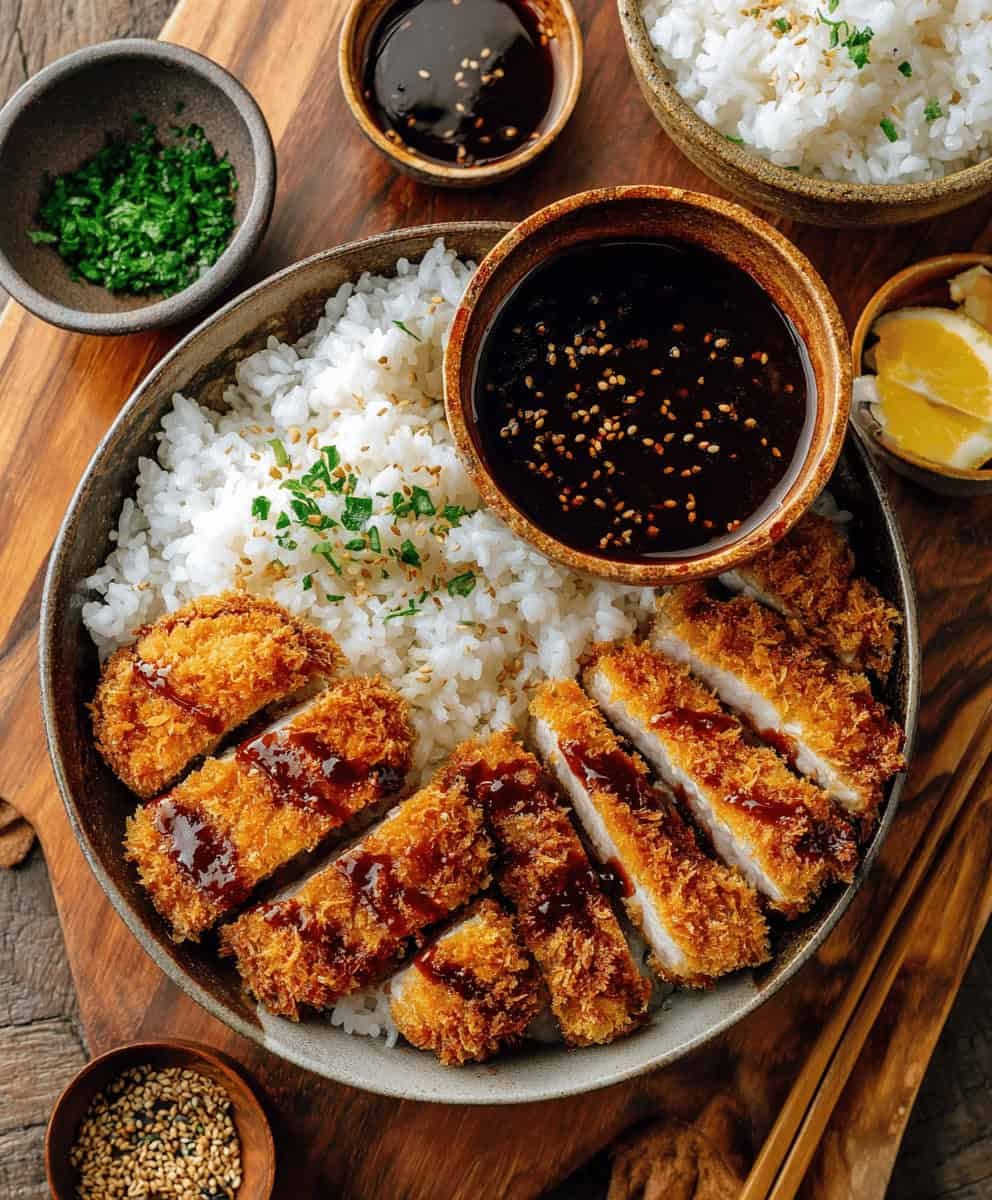
Master the art of the perfect Japanese Katsu Bowl at home! This recipe features impossibly crispy, airy panko-breaded pork cutlets, draped in a savory-sweet onion and egg blanket, served over steaming rice, and crowned with vibrant, homemade Tonkatsu sauce. A complete, soul-satisfying meal in a bowl.
Introduction:
There is a unique magic to a perfectly executed Japanese Katsu Bowl. It’s a symphony of textures and flavors that defines comfort food with elegance: the deafening, shattering crunch of golden-brown panko giving way to a juicy, tender pork cutlet, all nestled on a bed of fluffy rice and smothered in a softly set, umami-rich blanket of egg and onions. This dish, often called Katsudon, is a beloved staple in Japan for good reason—it balances richness, sweetness, saltiness, and savoriness in every bite. While it may seem intricate, our method breaks it down into foolproof stages: creating the crispiest tonkatsu (pork cutlet), a quick simmering donburi sauce, and a vibrant, tangy homemade Tonkatsu sauce that puts any bottled version to shame. This isn’t just a meal; it’s an experience, a project with delicious, rewarding results that will transport your dinner table straight to a bustling izakaya in Tokyo.
Recipe Details:
-
Prep Time: 25 minutes
-
Cook Time: 25 minutes
-
Total Time: 50 minutes
-
Skill Level: Intermediate (multi-component, timing-sensitive)
-
Cooking Intensity: Medium-High (managing frying and simmering components)
-
Course: Main Course
-
Servings: 2 (generous bowls)
-
Yield: 2 Katsu Bowls
Ingredients
For the Pork Katsu & Breading:
-
2 boneless pork loin chops (about 6 oz / 170g each), ½-inch thick
-
Salt and freshly ground white pepper (black pepper is fine)
-
¼ cup all-purpose flour
-
2 large eggs, beaten
-
1 ½ cups Japanese panko breadcrumbs
-
Neutral oil for frying (vegetable, canola, or peanut)
For the Simmering Donburi Sauce & Egg Blanket:
-
½ cup dashi stock (instant dashi powder + water is perfect)
-
2 tablespoons soy sauce
-
1 tablespoon mirin
-
1 tablespoon sake (or dry sherry)
-
1 teaspoon sugar
-
1 small yellow onion, thinly sliced
-
2 large eggs, lightly beaten (keep them slightly streaky)
For the Homemade Tonkatsu Sauce:
-
¼ cup ketchup
-
1 ½ tablespoons Worcestershire sauce
-
1 tablespoon oyster sauce
-
2 teaspoons sugar
-
1 teaspoon Dijon mustard
For Assembly:
-
3 cups cooked short-grain Japanese rice (hot)
-
1 scallion, thinly sliced
-
Shredded green cabbage or cabbage salad, for serving (optional, but traditional)
-
Beni shoga (pickled red ginger), for garnish
Equipment
-
Heavy-bottomed pot or Dutch oven for frying (deep enough for 1.5 inches of oil)
-
Wire rack set over a baking sheet
-
Instant-read thermometer (for oil)
-
2 small skillets or saucepans (one for sauce, one optional for eggs)
-
Paper towels
Instructions
Phase 1: The Foundation – Preparing the Perfect Cutlet (Time: 15 minutes | Intensity: Medium)
-
Prepare the Pork: Using a meat mallet, the back of a heavy pan, or a rolling pin, gently pound the pork chops between two pieces of plastic wrap to an even ¼-inch thickness. This ensures quick, even cooking and maximum tenderness. Season both sides lightly with salt and pepper.
-
Set Up Your Breading Station: Arrange three shallow dishes in an assembly line. Place the flour in the first, the beaten eggs in the second, and the panko breadcrumbs in the third. This is your mise en place and is crucial for a clean process.
-
The Triple-Bread: For each cutlet: Dredge thoroughly in flour, shaking off excess. Dip completely into the beaten egg, allowing excess to drip off. Finally, press firmly into the panko, coating every surface. Use your hands to gently pat and adhere a second layer of panko for an extra-craggy, shatteringly crisp crust. Place breaded cutlets on a plate.
Phase 2: The Crispy Crown – Frying the Katsu (Time: 10 minutes | Intensity: High)
-
Heat the Oil: Pour oil into your heavy pot to a depth of about 1.5 inches. Heat over medium-high heat to 340°F (170°C). Maintaining this temperature is key—too low and the cutlets will be greasy; too high and the panko will burn before the pork is cooked.
-
Fry to Golden Perfection: Carefully lower one breaded cutlet into the hot oil. Fry for 4-5 minutes, turning once or twice, until deeply golden brown and crispy. An instant-read thermometer inserted into the thickest part should read 145°F (63°C). Transfer immediately to the wire rack to drain—this keeps the bottom crispy. Repeat with the second cutlet. Let them rest for 2 minutes, then slice each into 1-inch thick strips against the grain.
Phase 3: The Savory Embrace – Making the Donburi Sauce & Egg (Time: 8 minutes | Intensity: Medium)
-
Simmer the Aromatics: In a small skillet or saucepan, combine the dashi, soy sauce, mirin, sake, and sugar. Add the sliced onions. Bring to a simmer over medium heat and cook for 4-5 minutes until the onions are translucent and softened.
-
The Signature Egg Blanket: Place the sliced katsu strips gently on top of the simmering onions in the skillet. Evenly drizzle the lightly beaten eggs over the katsu and onions—do not stir. Cover the skillet, reduce heat to low, and cook for 2-3 minutes, just until the egg is softly set but still slightly runny on top. Remove from heat immediately.
Phase 4: The Tangy Counterpoint – Homemade Tonkatsu Sauce (Time: 2 minutes | Intensity: Low)
While the katsu fries or rests, make the sauce. In a small bowl, whisk together all Tonkatsu sauce ingredients—ketchup, Worcestershire, oyster sauce, sugar, and mustard—until smooth and fully combined. Taste and adjust with a pinch more sugar if desired. This can be made days ahead.
Phase 5: The Grand Assembly – Building Your Bowl (Time: 5 minutes | Intensity: Low)
-
The Foundation: Divide the hot, steaming rice between two deep, wide bowls (traditional donburi bowls are ideal).
-
The Crown: Using a spatula, carefully lift the onion, egg, and katsu mixture from the skillet and drape it over the rice, allowing the residual sauce to seep down.
-
The Final Flourish: Drizzle a generous zigzag of the homemade Tonkatsu sauce over the katsu. Garnish with sliced scallions and a small pile of beni shoga (pickled ginger).
-
The Traditional Side: Serve immediately, accompanied by a small side of finely shredded cabbage salad lightly dressed with rice vinegar and a touch of sesame oil. The cool, crisp cabbage is the perfect textural and flavor contrast to the rich, warm bowl.
Notes & Culinary Mastery Tips
-
The Dashi Shortcut: Instant dashi granules (like Hondashi) are a pantry miracle. Mix ½ teaspoon with ½ cup hot water. For a vegetarian version, use a kombu (seaweed) and shiitake dashi.
-
Panko is Paramount: Do not substitute with regular breadcrumbs. The large, airy flakes of panko are responsible for the signature light, crispy texture. For extra crunch, you can toast the panko in a dry skillet for a few minutes before breading.
-
The Double-Fry Secret (Pro-Tip): For the absolute crispiest, longest-lasting crust, employ the double-fry method. Fry the katsu at 325°F (160°C) for 3-4 minutes until just set. Remove, drain, and let rest for 5 minutes. Then, increase oil temp to 350°F (175°C) and fry again for 1-2 minutes until deep golden. This renders the crust nearly impervious to sogginess.
-
Chicken Katsu Variation: Substitute with boneless, skinless chicken thighs or breasts, pounded thin. Adjust frying time to ensure chicken reaches 165°F (74°C) internally.
-
Storage & Reheating: Katsu is best eaten immediately. If you must store, keep components separate. Reheat sliced katsu in a toaster oven or air fryer to recrisp. The egg-onion mixture does not reheat well.
Nutrition Information
(Per bowl, including rice, katsu, egg blanket, and 1 tbsp Tonkatsu sauce. Estimate.)
-
Calories: ~950 kcal
-
Total Fat: 38g
-
Saturated Fat: 8g
-
-
Cholesterol: 315mg
-
Sodium: 1650mg
-
Total Carbohydrates: 105g
-
Dietary Fiber: 4g
-
Sugars: 18g
-
Protein: 48g
-
Rich In: Selenium, Thiamin (B1), Vitamin B6, Phosphorus, Iron.
This dish is a celebration of contrasts and craftsmanship. It offers the deeply satisfying, hands-on process of creating something truly special, culminating in a bowl that is greater than the sum of its parts. The crunch, the savory sauce, the sweet onion, the soft egg, and the fluffy rice create a harmony that is unforgettable. It’s a rewarding project that yields a taste of Japan’s culinary soul. いただきます (Itadakimasu)!