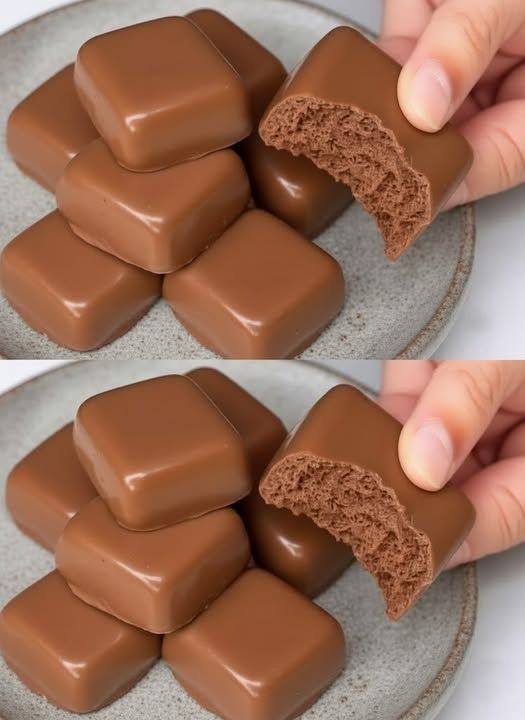
Transform simple ingredients into a bar of pure, unadulterated luxury. This homemade chocolate recipe bypasses the stabilizers and additives of commercial bars, delivering an intense, complex dark chocolate experience. Featuring a bold 70% cocoa base, studded with roasted almonds and accented by flaky sea salt, this bar boasts a profound chocolate flavor, a satisfyingly crisp “snap,” and a silky-smooth melt. It’s a lesson in craftsmanship, a perfect edible gift, and the definitive answer to the question: what does real chocolate taste like?
Prep Time: 30 minutes
Setting Time: 2-3 hours
Total Time: 3-4 hours (mostly hands-off)
Intensity Level: Intermediate (requires precision with temperature)
Yield: One 100g (3.5oz) artisan bar, or about 8-10 smaller pieces
Ingredients
For the Chocolate (Tempered):
-
100g (3.5 oz) high-quality cocoa butter, chopped or in pastilles
-
50g (½ cup) high-quality unsweetened cocoa powder (Dutch-process preferred)
-
40g (¼ cup) confectioners’ (icing) sugar, sifted
-
15g (1 tbsp) light brown sugar or coconut sugar, finely ground (optional, for deeper notes)
-
Pinch of fine sea salt (about ⅛ tsp)
For the Inclusions & Flavoring:
-
30g (⅓ cup) whole almonds, lightly roasted and coarsely chopped
-
Flaky sea salt (such as Maldon), for finishing
-
Optional Flavor Variations (choose one):
-
½ tsp pure vanilla bean paste or extract
-
¼ tsp espresso powder (dissolved in ¼ tsp hot water)
-
Zest of 1 small orange
-
Equipment Notes: A digital kitchen scale is essential for precision. A candy or instant-read thermometer is highly recommended for tempering.
Instructions
Part 1: Preparation & Roasting
-
Prep Molds: Thoroughly clean and dry your chocolate bar mold. For a professional finish, a polycarbonate mold is best. Place it on a small baking sheet for stability.
-
Roast the Almonds: Preheat your oven to 350°F (175°C). Spread the almonds on a small baking sheet and roast for 8-10 minutes, until fragrant and lightly golden. Let cool completely, then chop coarsely. Set aside.
-
Prepare Workstation: Ensure all your ingredients are measured and within reach. Tempering is a time-sensitive process.
Part 2: The Tempering Process (Seed Method)
This method uses pre-melted cocoa butter as the “seed” to encourage proper crystal formation. Maintaining precise temperatures is the single most important step for achieving a glossy finish and a crisp snap.
-
Melt Two-Thirds of Cocoa Butter: In a completely dry, heatproof bowl (glass or metal), place 65g of the chopped cocoa butter. Create a double boiler by setting the bowl over a pot of gently simmering water, ensuring the bottom of the bowl does not touch the water. Stir gently and frequently until the cocoa butter is completely melted and clear. Heat it to 115°F (46°C). Remove the bowl from the heat and carefully wipe the bottom dry.
-
“Seed” the Melt: Immediately add the remaining 35g of solid, unmelted cocoa butter to the hot, melted cocoa butter. This is your “seed.” Stir constantly and gently until all the solid pieces are just melted and the temperature of the mixture drops to between 89°F – 91°F (31.5°C – 32.5°C). This is your working, tempered temperature.
-
Incorporate Dry Ingredients: Once at the perfect working temperature, immediately sift in the cocoa powder, confectioners’ sugar, brown sugar (if using), and fine sea salt. Using a whisk and then a flexible spatula, mix vigorously until the mixture is completely smooth, glossy, and lump-free. This is your chocolate “cocoa mass.” If using an optional flavoring like vanilla or espresso, stir it in now.
-
Test the Temper (The “Strip Test”): This is your quality check. Dip the tip of a clean knife or small offset spatula into the chocolate. Set it aside at cool room temperature (around 68°F/20°C). If the chocolate is in temper, it should set within 3-5 minutes, be fully hard, and have a high-gloss shine. If it sets dull, streaky, or soft, it is not in temper (see troubleshooting notes below).
Part 3: Molding & Setting
-
Pour & Tap: Working quickly while the chocolate is in its tempered state, pour the chocolate into your prepared mold. Tap the mold firmly on the counter several times to release any air bubbles and ensure the chocolate flows into all details.
-
Add Inclusions: Immediately sprinkle the chopped, cooled roasted almonds evenly over the surface. Follow with a delicate, even scattering of flaky sea salt.
-
Set to Perfection: Carefully transfer the mold (on its baking sheet) to a level spot in the refrigerator. Do not cover. Let it set undisturbed for 15-20 minutes until the surface is no longer liquid, then let it finish setting at a cool room temperature (not in the fridge) for 2-3 hours. Important: Rapid cooling in the fridge can cause condensation or “bloom” (a whitish coating). The ideal setting is in a cool, dry place (65-68°F / 18-20°C).
Part 4: Unmolding & The Final Curating Step
-
The Unmolding Test: After the full setting time, the chocolate should have pulled away slightly from the edges of the mold. It should feel firm and cool to the touch. Gently flex the mold; the bar should release easily.
-
Unmold: Invert the mold onto a clean piece of parchment paper. The bar should drop out cleanly with minimal tapping. If it resists, it may need a bit more time or can be placed in the fridge for just 2-3 minutes to contract further.
-
The Last Step – Resting: Once unmolded, this is the final, crucial step for texture development: let the bar rest, wrapped, at cool room temperature for 24 hours. This allows the cocoa butter crystals to fully stabilize into their most stable form (Form V), which maximizes the crisp snap and extends shelf life. Your patience will be profoundly rewarded.
Storage & Lasting
-
Ideal Conditions: Store the finished bar in an airtight container or wrapped in foil/parchment in a cool, dark, dry place (60-68°F / 15-20°C is ideal). Do not refrigerate unless your ambient temperature is consistently above 75°F (24°C), and then only in a perfectly sealed container to prevent moisture and odor absorption.
-
Shelf Life: Properly tempered and stored, this chocolate will maintain its optimal texture and flavor for 4-6 weeks.
-
Chocolate Bloom: If a white or grayish coating appears (fat bloom or sugar bloom), it is safe to eat but indicates the chocolate was exposed to temperature fluctuations or moisture. The texture may be slightly grainier, but the flavor remains good. It can be remelted and re-tempered.
Troubleshooting Tempering:
-
Dull or Soft Set: The chocolate is not in temper. Gently re-melt it to 115°F (46°C) and repeat the seeding process with a fresh 20g of solid cocoa butter.
-
Streaky: The chocolate was agitated or moved during the initial setting phase. Ensure it sets in a vibration-free spot.
Nutritional Information (Per ¼ of the total bar, approx. 25g, estimated)
-
Calories: ~150 kcal
-
Total Fat: 14g
-
Saturated Fat: 8g
-
-
Cholesterol: 0mg
-
Sodium: 55mg (varies with salt used)
-
Total Carbohydrates: 7g
-
Dietary Fiber: 3g
-
Sugars: 3g (all naturally occurring from cocoa or added sugar)
-
-
Protein: 3g
Artisan Ingredient Spotlight & Benefits:
This is not merely candy; it is a crafted food product with distinct advantages:
-
Cocoa Butter: The pure, pressed fat from the cocoa bean. It’s a source of healthy saturated and monounsaturated fats, contains natural antioxidants, and is responsible for chocolate’s luxurious melt.
-
Cocoa Powder: Provides the intense chocolate flavor and is rich in flavanols, plant compounds studied for their potential benefits to heart health and cognitive function. Using a high-quality powder maximizes this benefit.
-
Minimal, Controlled Sweetening: You control the sugar. At 40g total sugar per 100g bar, this is a true 70% dark chocolate, significantly lower in sugar than most commercial “dark” chocolates.
-
No Emulsifiers or Additives: Free from soy lecithin, PGPR, artificial flavors, or preservatives. What you see is exactly what you get: cocoa, sweetener, nuts, and salt. The purity of flavor is unparalleled.