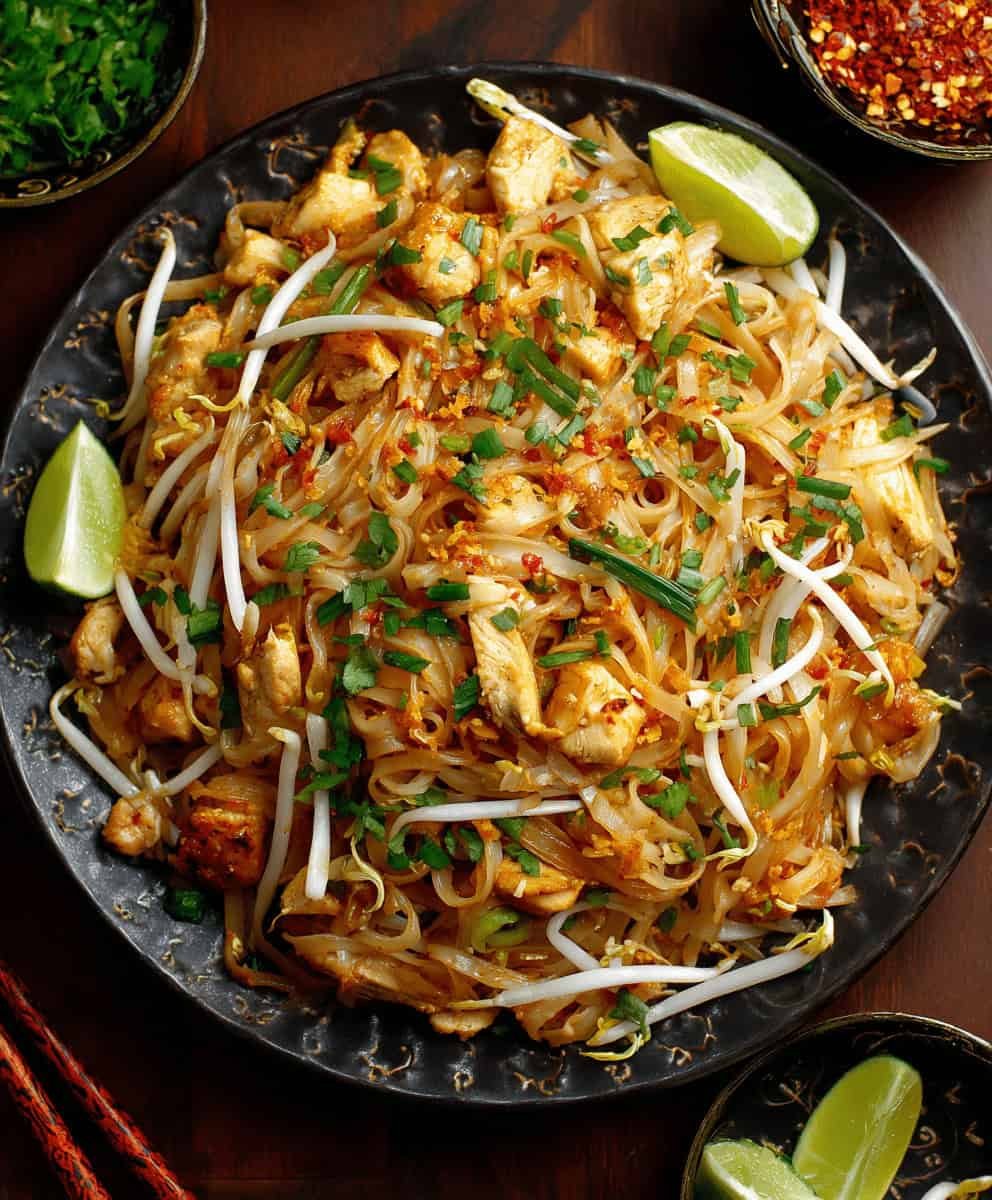
Prep Time: 40 minutes (includes prep & soaking) | Cook Time: 15 minutes | Total Time: 55 minutes | Skill Level: Intermediate | Serves: 4 | Intensity: High, Fast-Paced Stir-Frying
Authentic Chicken Pad Thai is a symphony of sweet, sour, salty, and umami flavors wrapped around chewy rice noodles, all executed in a blisteringly hot wok. This recipe demystifies the takeout favorite, breaking down the essential components—the all-important sauce, the protein, and the signature toppings—to help you achieve that perfect balance of textures and flavors at home. While it requires focused prep and fast cooking, the result is a vibrant, restaurant-quality dish that’s deeply rewarding to master.
Ingredients
For the Pad Thai Sauce:
-
¼ cup (60 ml) fish sauce (preferably Thai brand like Tiparos or Squid)
-
¼ cup (60 ml) tamarind concentrate/paste (not sweetened syrup—this is the key sour note)
-
3 tablespoons palm sugar, finely chopped, or light brown sugar
-
2 tablespoons rice vinegar
-
1 tablespoon soy sauce or tamari
-
1-2 teaspoons chili garlic sauce or sriracha (adjust to heat preference)
For the Noodles & Protein:
-
8 oz (225g) wide, flat rice stick noodles (labeled Pad Thai noodles, about ¼-inch wide)
-
2 tablespoons neutral oil (like avocado or canola), divided
-
2 large eggs, lightly beaten
-
2 boneless, skinless chicken breasts (about 12 oz / 340g), thinly sliced into bite-sized strips
-
1 tablespoon cornstarch
-
1 tablespoon soy sauce
For the Stir-Fry & Aromatics:
-
3 cloves garlic, minced
-
1 shallot, finely minced
-
½ cup firm tofu, pressed and cut into small cubes (optional, but traditional)
-
1 cup bean sprouts, divided
-
3-4 green onions, cut into 1-inch pieces
-
½ cup roasted unsalted peanuts, coarsely chopped, divided
For Serving (The Garnish Plate – Essential):
-
1 lime, cut into wedges
-
Fresh bean sprouts
-
Fresh cilantro leaves
-
More chopped peanuts
-
Chili flakes or sliced fresh red chilies
Equipment
-
Large bowl for soaking noodles
-
Wok or large, deep skillet (14-inch is ideal)
-
Spatula or wok turner
-
Small saucepan
-
Whisk
-
Prep bowls (mise en place is critical)
Instructions
1. The Critical Prep: Soak, Sauce, and Organize (30 mins)
Soak Noodles: Place rice stick noodles in a large bowl. Cover with very hot (not boiling) tap water. Soak for 20-30 minutes, stirring once or twice, until they are pliable but still firm to the bite (al dente). They will finish cooking in the wok. Drain and set aside.
Make the Sauce: In a small saucepan over low heat, combine fish sauce, tamarind concentrate, palm sugar, rice vinegar, soy sauce, and chili sauce. Warm gently, whisking until the sugar fully dissolves. Do not boil. Set aside. This is your flavor foundation.
Marinate Chicken: Toss sliced chicken with 1 tablespoon soy sauce and cornstarch. Set aside.
Prep All Components: Have garlic, shallot, tofu, eggs, green onions, ½ cup bean sprouts, and ½ cup peanuts measured and in separate bowls. Arrange your garnish plate. This “mise en place” is non-negotiable for a smooth stir-fry.
2. The Wok Sequence: A High-Heat Ballet (12-15 mins)
Heat your wok or large skillet over high heat until smoking hot. This intense heat (wok hei) is essential.
Step 1 – Scramble Eggs: Add 1 tablespoon oil, swirl. Pour in beaten eggs, let set for 5 seconds, then scramble quickly until just set. Transfer back to their bowl.
Step 2 – Cook Chicken: Add remaining 1 tablespoon oil. Add marinated chicken in a single layer. Let sear undisturbed for 1 minute, then stir-fry for 2-3 minutes until just cooked through. Remove to the plate with the eggs.
Step 3 – Aromatics & Tofu: Add a touch more oil if needed. Add garlic, shallot, and optional tofu. Stir-fry for 45 seconds until fragrant.
Step 4 – Noodles & Sauce: Push aromatics to the side. Add drained noodles and the prepared Pad Thai sauce. Using tongs and a spatula, toss and lift constantly for 2-3 minutes, allowing noodles to absorb the sauce and become tender.
Step 5 – Combine Everything: Return chicken, eggs, and any juices to the wok. Add green onions and ½ cup of bean sprouts. Toss everything together for 1-2 minutes until heated through and cohesive.
Step 6 – The Finish: Remove from heat. Fold in half of the chopped peanuts.
3. Serve Immediately (2 mins)
Divide among plates. Top with remaining fresh bean sprouts and chopped peanuts. Serve immediately with the full garnish plate on the side, allowing everyone to customize with lime juice, cilantro, extra peanuts, and chili.
**The Last Bite: The Philosophy of Balance and “Wok Hei”
Authentic Pad Thai is not merely a noodle dish; it is an edible expression of Thai culinary philosophy, where the ultimate goal is harmonious balance across five fundamental taste senses: sweet (wan), sour (priow), salty (kem), bitter (kom), and spicy (phet). Each component of this recipe serves one of these roles, and the cooking technique binds them together.
The sauce is the soul, and its balance is precise. The salty depth comes from fish sauce (fermented anchovies), the sharp, fruity sour from pure tamarind, the caramel-like sweetness from palm sugar, and a subtle heat from chilies. They are gently warmed to integrate but never boiled, preserving their distinct voices. When this complex sauce hits the porous, rehydrated rice noodle in the searing wok, the noodle acts as a sponge, soaking up the flavor matrix while its surface caramelizes.
This leads to the second critical concept: wok hei (镬气), or “the breath of the wok.” This is the elusive, smoky essence achieved only by cooking over violent, direct heat in a properly seasoned wok. The high heat triggers the Maillard reaction on the noodles and proteins, creating hundreds of new flavor compounds. It also vaporizes the sauce and oils, which then re-condense onto the ingredients, intensifying flavors in a way lower heat cannot replicate. The rapid cooking in stages—protein, then aromatics, then noodles—ensures each element is perfectly cooked without steaming or stewing, preserving texture.
Finally, the dish is completed at the table. The fresh, cool garnishes are not afterthoughts; they are the final calibrators of balance. A squeeze of lime adds a bright, volatile acidity that lifts the entire dish. The crunchy bean sprouts and peanuts provide textural contrast to the soft noodles. The fresh cilantro and extra chilies offer herbal and capsaicin notes. This interactive element honors the individual palate, making the meal dynamic and personal. Mastery of Pad Thai, therefore, is a lesson in prep, high-heat technique, and the beautiful, delicate pursuit of taste equilibrium.
Nutrition Information (Per Serving, without optional tofu)
-
Calories: ~560 kcal
-
Total Fat: 20g
-
Saturated Fat: 3g
-
Cholesterol: 140mg
-
Sodium: 1850mg
-
Total Carbohydrates: 68g
-
Dietary Fiber: 3g
-
Sugars: 14g
-
Protein: 30g
Note: Sodium is high primarily due to fish sauce and soy sauce; you can reduce by 1 tbsp of fish sauce, though it will alter the authentic flavor profile. For a gluten-free version, use tamari instead of soy sauce and ensure your fish sauce is gluten-free (most are). Using pure tamarind concentrate, not a sweetened “pad thai sauce,” is the single most important ingredient choice for authentic sour flavor. The high heat and fast pace mean you must have all ingredients prepped and within arm’s reach before you turn on the wok.