Prep Time: 15 minutes | Cook Time: 20 minutes | Total Time: 35 minutes
Skill Level: Beginner to Intermediate | Serves: 4 | Intensity: Moderate, active stovetop cooking
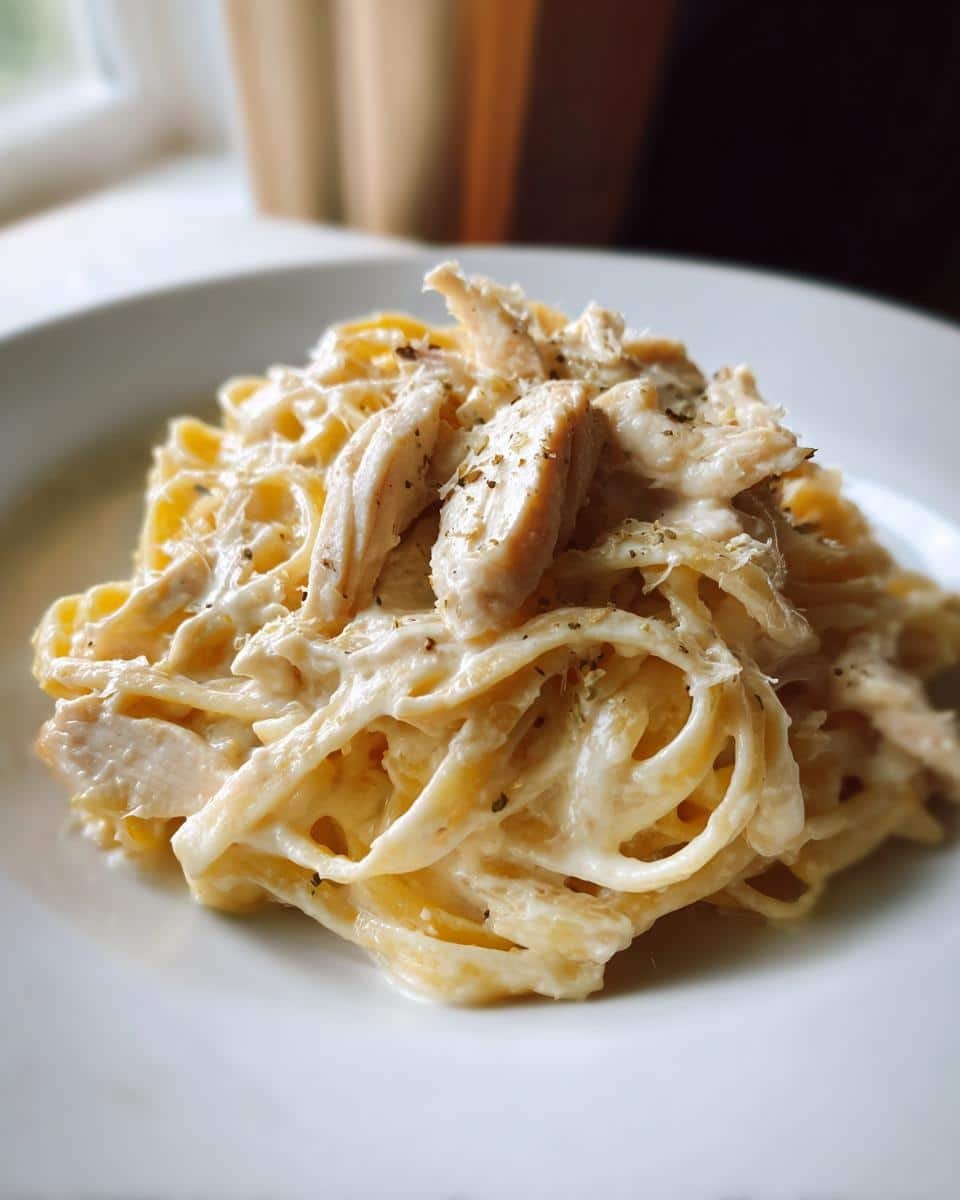
This Simple Chicken Alfredo Recipe is a masterclass in elegance through restraint. It pares down the iconic pasta dish to its essential, perfect elements: tender, golden chicken, a luxuriously smooth and garlicky cream sauce, and perfectly cooked fettuccine. Forget jarred sauces; this recipe delivers a from-scratch Alfredo that is rich, balanced, and deeply satisfying, demonstrating how a handful of quality ingredients and focused technique can create a timeless restaurant-quality meal in your own kitchen in well under an hour.
Ingredients
For the Chicken:
-
1.5 lbs boneless, skinless chicken breasts or thighs
-
1 teaspoon kosher salt
-
½ teaspoon black pepper
-
1 teaspoon Italian seasoning or dried oregano
-
1 tablespoon olive oil
-
1 tablespoon unsalted butter
For the Pasta & Sauce:
-
12 oz (340g) fettuccine or tagliatelle pasta
-
½ cup (1 stick / 113g) high-quality unsalted butter
-
4-5 large cloves garlic, minced or finely grated
-
2 cups (480 ml) heavy cream
-
1 ½ cups (about 5 oz / 140g) finely grated Parmigiano-Reggiano cheese, plus more for serving
-
¼ teaspoon freshly grated nutmeg (optional, but classic)
-
Salt and white pepper to taste (white pepper maintains a pristine sauce color)
For Finishing:
-
Fresh Italian parsley, finely chopped
-
Additional grated Parmigiano-Reggiano
Equipment
-
Large pot for pasta
-
Large, deep skillet or sauté pan (12-inch minimum)
-
Tongs
-
Whisk
-
Microplane or fine grater for cheese
-
Measuring cups and spoons
-
Meat mallet or rolling pin (optional, for even chicken)
Instructions
1. Prepare and Cook the Chicken (12-15 mins)
Place chicken breasts between two sheets of plastic wrap and gently pound to an even ½-inch thickness. This ensures quick, even cooking. Pat dry thoroughly and season both sides with salt, black pepper, and Italian seasoning.
Heat olive oil and 1 tablespoon butter in your large skillet over medium-high heat. Once hot, add the chicken. Cook for 5-7 minutes per side, without moving, until deeply golden brown and cooked through (internal temperature of 165°F / 74°C). Transfer to a clean plate, cover loosely with foil, and let rest. Do not wipe out the skillet. Those browned bits (fond) are flavor gold.
2. Cook the Pasta & Start the Sauce (10 mins concurrent)
While the chicken cooks, bring a large pot of generously salted water to a boil. Cook the fettuccine according to package directions for al dente. RESERVE 1 ½ CUPS of the starchy pasta water before draining. Drain the pasta and set aside.
Return the skillet with chicken fond to medium heat. Add the ½ cup (1 stick) of butter. Once melted, add the minced garlic. Cook for 60-90 seconds, stirring constantly, until fragrant but not browned.
3. Create the Alfredo Sauce (5 mins)
Pour the heavy cream into the skillet, whisking to incorporate the garlic butter and fond. Bring to a very gentle simmer—do not boil vigorously. Let it simmer for 3-4 minutes, allowing it to reduce and thicken slightly. It should coat the back of a spoon.
Reduce the heat to low. Gradually whisk in the grated Parmigiano-Reggiano, a handful at a time, ensuring each addition is fully melted and incorporated before adding the next. This prevents clumping. The sauce will transform into a velvety, cohesive emulsion. Whisk in the nutmeg. Season carefully with salt and white pepper. Remember, the cheese is salty.
4. The Grand Emulsification (3 mins)
Add the drained pasta directly to the sauce in the skillet. Using tongs, toss and lift vigorously for 1-2 minutes, ensuring every strand is coated. The sauce will seem thick at first. Now, add the reserved pasta water, a few tablespoons at a time, while tossing continuously. The starch in the water will loosen the sauce to a silky, clinging consistency that perfectly coats the pasta. You may not need all the water. The goal is a fluid, glossy sauce that pools slightly on the plate.
5. Slice, Serve, and Finish (2 mins)
Slice the rested chicken against the grain into ½-inch strips. Divide the sauced pasta among warm bowls or plates. Fan the sliced chicken over the top. Garnish liberally with chopped fresh parsley and a final snowfall of grated Parmigiano-Reggiano. Serve immediately.
The Last Bite: The Alchemy of Emulsion
This “simple” Alfredo is a dramatic lesson in culinary physics, specifically the creation and maintenance of a stable fat-in-water emulsion. Understanding this process is what separates a glossy, restaurant-style sauce from a broken, greasy one.
The foundation is the Parmigiano-Reggiano, a cheese uniquely suited to this task. It contains casein proteins and emulsifying salts (like sodium phosphate) that are naturally adept at bonding fat and water. When grated finely and introduced gradually to the warm (not boiling) cream, these components act as bridges. The casein proteins unfold and surround tiny globules of butterfat, preventing them from coalescing and separating from the water-based whey in the cream and cheese.
The pasta water is not just a thinning agent; it’s the catalyst for perfection. It is a concentrated starch slurry. These starch molecules act as a protective colloid, further stabilizing the emulsion by increasing the viscosity of the water phase, making it harder for the fat droplets to move and merge. Adding it while tossing the pasta creates a violent, mechanical agitation that perfectly disperses the fat and water phases, resulting in the signature creamy, nappe consistency that clings to each strand without being gluey or soupy.
The common pitfalls are all related to breaking this emulsion: overheating causes the proteins to tighten violently and squeeze out fat; adding cold cheese or cream shocks the system; using pre-grated cheese (coated in anti-caking powders like cellulose) introduces a barrier that prevents proper melting and integration. This recipe’s sequence—gentle simmering of cream, off-heat cheese incorporation, and starchy-water finish—is a carefully designed protocol to nurture this fragile emulsion.
Finally, the seared chicken contributes more than just protein. The Maillard reaction on its surface created complex flavor compounds. The resting period allowed its juices to redistribute, and when sliced and placed atop the pasta, those savory juices subtly mingle with the sauce, adding a layer of savory depth that elevates the entire dish from mere pasta to a complete, harmonious meal. This isn’t just a quick dinner; it’s a delicious demonstration of kitchen science in action.
Nutrition Information (Per Serving)
-
Calories: ~980 kcal
-
Total Fat: 68g
-
Saturated Fat: 40g
-
Cholesterol: 285mg
-
Sodium: 880mg
-
Total Carbohydrates: 68g
-
Dietary Fiber: 3g
-
Sugars: 4g
-
Protein: 58g
Note: Nutritional information is an estimate and can vary based on specific brands, exact measurements, and how much pasta water is incorporated. This is a rich, indulgent dish. For a slightly lighter version, you can substitute half the heavy cream with whole milk, though the sauce will be less lush. Using a high-quality, real Parmigiano-Reggiano (not a shelf-stable “green can” powder) is non-negotiable for both flavor and sauce texture. The key to the perfect consistency is in the toss: be vigorous and unafraid to add that magical pasta water.