Prep Time: 25 minutes (plus optional 30 minutes chilling) | Cook Time: 45-55 minutes | Total Time: 1 hour 10 minutes – 1 hour 40 minutes
Skill Level: Intermediate (Beginner-friendly with pre-made crust) | Serves: 6-8 | Intensity: Moderate, precision-focused prep
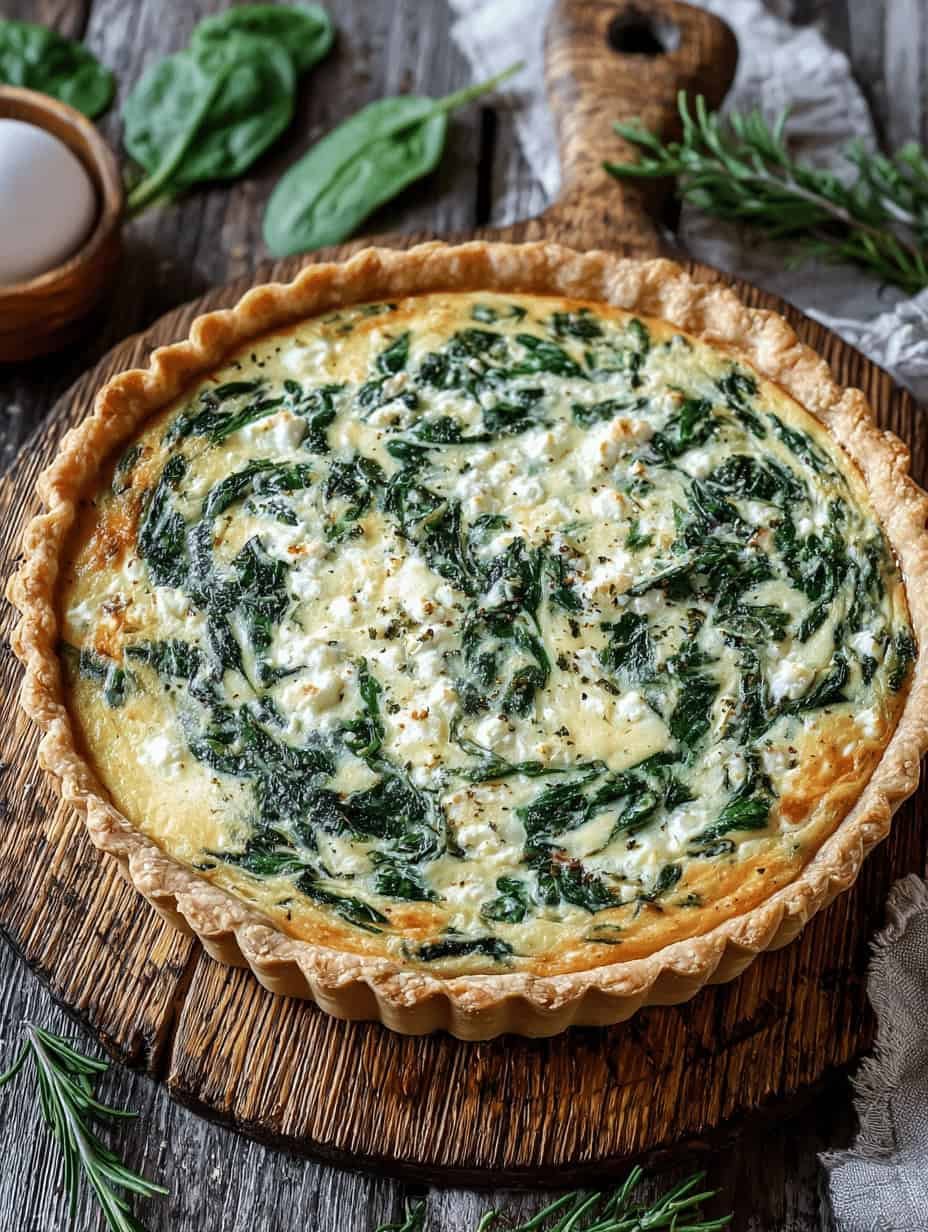
This Spinach Feta Quiche is the ultimate expression of elegant simplicity. It transforms a handful of fresh, vibrant ingredients into a stunning, savory custard pie that is equally at home on a brunch buffet, a light lunch table, or a simple dinner spread. Featuring a flaky, buttery crust encasing a filling of tender spinach, salty feta, sweet caramelized onions, and a silky-smooth egg custard, this recipe teaches fundamental techniques that yield spectacular, reliable results every time.
Ingredients
For the All-Butter Pie Crust (or use 1 store-bought deep-dish pie shell):
-
1 ¼ cups (150g) all-purpose flour, plus more for dusting
-
½ teaspoon kosher salt
-
½ cup (1 stick / 113g) unsalted butter, very cold and cubed
-
3-5 tablespoons ice water
For the Spinach Feta Filling:
-
1 tablespoon olive oil
-
1 medium yellow onion, thinly sliced
-
1 (10 oz) bag fresh spinach, roughly chopped, or 1 (5 oz) package frozen chopped spinach, thawed and squeezed VERY dry
-
4 large eggs
-
1 ½ cups (360 ml) heavy cream, half-and-half, or whole milk
-
½ teaspoon kosher salt
-
¼ teaspoon black pepper
-
¼ teaspoon freshly grated nutmeg
-
6 oz (170g) high-quality feta cheese, crumbled (about 1 ½ cups)
-
½ cup (2 oz) grated Gruyère, Swiss, or Parmesan cheese (optional, for extra depth)
Equipment
-
9-inch deep-dish pie plate or tart pan with removable bottom
-
Food processor (for crust) or pastry cutter and large bowl
-
Rolling pin
-
Parchment paper and pie weights or dried beans
-
Large skillet
-
Mixing bowls
-
Whisk
Instructions
1. Make & Blind-Bake the Crust (40-60 mins, mostly inactive)
A. Prepare the Dough: In a food processor, pulse the flour and salt. Add the cold, cubed butter and pulse until the mixture resembles coarse meal with pea-sized butter pieces. Drizzle in ice water, 1 tablespoon at a time, pulsing just until the dough begins to clump. Turn out onto a floured surface, gather into a disk, wrap tightly in plastic, and chill for at least 30 minutes (up to 2 days). This rest relaxes the gluten and firms the butter, ensuring a flaky crust.
B. Roll & Dock: On a floured surface, roll the dough into a 12-inch circle. Gently transfer to your pie plate. Trim and crimp the edges. Prick the bottom all over with a fork (docking). Chill for 15 minutes. Preheat oven to 400°F (200°C).
C. Blind Bake: Line the chilled crust with parchment paper and fill with pie weights. Bake for 15 minutes. Carefully remove weights and parchment. Bake for 5-8 more minutes until the crust is just set and lightly golden. Reduce oven to 375°F (190°C).
2. Prepare the Filling (15 mins)
While the crust bakes, heat olive oil in your large skillet over medium-low heat. Add the sliced onion and a pinch of salt. Cook slowly, stirring occasionally, for 12-15 minutes until soft, golden, and caramelized. This builds a sweet, savory base.
Increase heat to medium. If using fresh spinach, add it in batches, wilting each addition before adding more. If using prepped frozen spinach, add it and cook for 2-3 minutes to evaporate any residual moisture. Ensuring your spinach mixture is dry is critical to prevent a soggy crust. Let cool slightly.
3. Assemble the Quiche (5 mins)
In a large bowl, whisk the eggs, cream, salt, pepper, and nutmeg until completely homogeneous and slightly frothy.
Sprinkle half of the crumbled feta and the optional grated cheese (if using) over the bottom of the warm, par-baked crust. Spread the cooled spinach and onion mixture evenly over the cheese. Top with the remaining feta.
Gently pour the egg custard mixture over the fillings, allowing it to seep into all the gaps.
4. Bake to Perfection (45-55 mins)
Carefully transfer the quiche to the middle rack of your 375°F (190°C) oven. Bake for 45 to 55 minutes. The quiche is done when the edges are fully set and puffed, and the center just jiggles slightly—like firm Jell-O—when gently shaken. A knife inserted about 1 inch from the center should come out clean. The top will be beautifully golden brown.
5. The Mandatory Rest & Serve (20+ mins)
This is the chef’s secret. Remove the quiche from the oven and let it cool on a wire rack for at least 20 minutes before slicing. This allows the custard to finish setting via residual heat and firm up, enabling you to cut clean, beautiful wedges. It can be served warm, at room temperature, or chilled.
The Last Bite: The Science of Silky Custard and Flaky Crust
The magic of a perfect quiche lies in the harmonious interplay of its two components: the custard and the crust, each governed by precise scientific principles.
The custard is a delicate protein network. The eggs (primarily the proteins albumin and ovotransferrin) and the dairy proteins denature and coagulate as they heat. Cooking them gently at 375°F allows this network to form gradually, trapping moisture and fat in a tender, unified gel. Overheating or baking too quickly causes the proteins to contract violently, squeezing out water (syneresis) and resulting in a rubbery, weeping texture. The fat in the cream or whole milk lubricates this network, contributing to a luxuriously silky mouthfeel. The critical step of thoroughly drying the spinach prevents excess water from diluting the egg proteins and disrupting this fragile matrix, ensuring a slice that holds its shape.
The crust is a study in contrasts: flaky layers versus a sturdy, leak-proof vessel. The blind bake (pre-baking with weights) is non-negotiable. It uses direct, high heat to set the crust’s structure and gelatinize its starches, creating a moisture-resistant barrier before the wet custard is added. Without it, the crust’s bottom becomes soggy as the fat melts before the starch can set. The flakiness itself is engineered by keeping the butter cold and in discrete pieces. In the oven, these solid butter pockets melt, releasing steam that pushes apart the flour-and-water layers (the gluten matrix), creating hundreds of delicate, buttery strata.
The final rest is where the chemistry concludes. As the quiche cools, the egg proteins complete their coagulation and bond more firmly, the starches in the crust finish setting, and the fats slightly solidify. This transforms the quiche from a fragile, trembling beauty into a sliceable masterpiece. This Spinach Feta Quiche isn’t just a recipe; it’s an edible lesson in the physics of heat, the chemistry of proteins, and the deep satisfaction of technique-made-perfect. It rewards patience with a texture and flavor that is timeless and utterly irresistible.
Nutrition Information (Per Serving, based on 8 slices, using heavy cream)
-
Calories: ~425 kcal
-
Total Fat: 34g
-
Saturated Fat: 20g
-
Cholesterol: 185mg
-
Sodium: 620mg
-
Total Carbohydrates: 18g
-
Dietary Fiber: 2g
-
Sugars: 3g
-
Protein: 13g
Note: Nutritional values are estimates and can vary significantly based on specific ingredients and crust choice. Using half-and-half or whole milk instead of heavy cream will reduce fat and calorie content. The sodium level is heavily influenced by the feta cheese; a less-salty feta can be used. For a gluten-free version, use a certified gluten-free pie crust. This quiche stores beautifully, covered, in the refrigerator for up to 4 days and can be reheated gently or served cold. The mandatory cooling time is essential for the perfect slice.